English
 Español
 tiếng việt
 русский
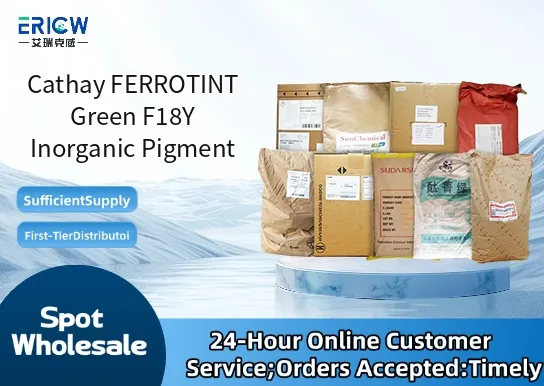
High thermal stability up to 600 °C, ensuring color retention during high-temperature processing.
Excellent lightfastness and weather resistance, suitable for long-term outdoor exposure.
Non-toxic, heavy-metal-free formulation compliant with global regulatory standards including EN 71-3 and RoHS.
Superior dispersion performance in aqueous and solvent-based systems without requiring specialized surfactants.
Consistent batch-to-batch color strength and hue, supported by strict in-house quality control.
Ceramic glazes and underglaze decorations for tableware and architectural tiles.
High-performance coatings for industrial equipment and exterior building facades.
Coloration of construction materials including concrete, mortar, and fiber-cement boards.
Plastic compounds for automotive interior components requiring heat and UV resistance.
Specialty inks for packaging films requiring food-contact compliance and thermal stability.
| Chemical Type | Complex mixed-metal oxide (chromium-iron spinel) |
| Product Form | Free-flowing fine powder |
| Appearance | Opaque green granular powder |
| Primary Applications | Ceramics, architectural coatings, construction materials, engineering plastics |
| Key Features | Heat stable, lightfast, non-toxic, chemically inert |
| Benefits | No blooming, low oil absorption, excellent tinting strength |
| pH (5% aqueous suspension) | 6.5–7.5 |
| Volatiles (105 °C, 2 hrs) | ≤ 0.5 wt% |
Q1: What is the primary chemical composition of Cathay FERROTINT Green F18Y?
A: Cathay FERROTINT Green F18Y is a complex inorganic mixed metal oxide pigment, based predominantly on iron and chromium oxides, engineered to deliver stable green coloration with high thermal and chemical resistance.
Q2: Is this pigment suitable for use in food-contact plastics or coatings?
A: Cathay FERROTINT Green F18Y is formulated for industrial applications where regulatory compliance with food-contact standards is not required. It is not pre-qualified for direct food-contact use; customers must conduct full regulatory assessment—including migration testing—based on their specific end-use and applicable jurisdictional requirements.
Q3: How does F18Y perform under high-temperature processing conditions?
A: As an inorganic oxide pigment, F18Y exhibits excellent thermal stability and retains its color integrity during standard polymer processing—including injection molding, extrusion, and calendering—at temperatures up to approximately 800°C in inert atmospheres. In typical polymer melts (e.g., polyolefins, engineering thermoplastics), it remains stable well beyond common processing ranges.
Q4: Can F18Y be dispersed effectively in water-based systems?
A: While inherently hydrophobic due to its inorganic oxide nature, F18Y can be successfully incorporated into aqueous systems using appropriate dispersants, surfactants, or surface treatments. Optimal dispersion typically requires high-shear mixing and formulation-specific stabilization strategies.
Q5: What are the recommended handling precautions for this pigment?
A: Standard industrial hygiene practices apply: avoid inhalation of dust, use local exhaust ventilation during dry handling, and wear appropriate PPE such as N95 respirators, gloves, and safety goggles. The material is non-volatile and non-flammable, but good housekeeping minimizes airborne particulate exposure.
Contact With Us:
E-mail: wangxingqiang@ericwchem.com
Have a Questions? Call Us:
Add:
Building A1, Jiete Industrial Park, Huangpu District, Guangzhou City, Guangdong Province, China