English
 Español
 tiếng việt
 русский
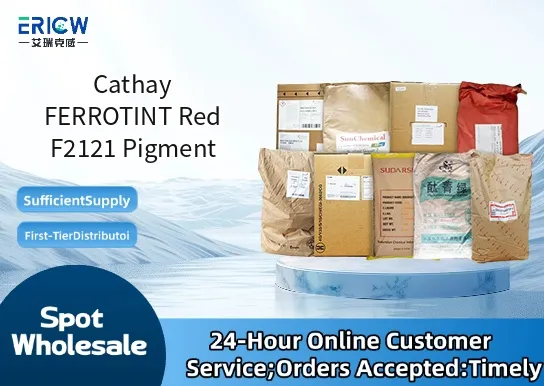
High chroma, warm-toned red shade with excellent color consistency across batches.
Outstanding thermal stability suitable for processing temperatures up to 200 °C.
Good dispersibility in both aqueous and solvent-based systems without requiring specialized grinding aids.
Low water-soluble salt content, minimizing corrosion risk in metal-coated applications.
Compliant with major global regulatory frameworks including REACH and RoHS (heavy metals below threshold limits).
Automotive OEM and refinish coatings.
Industrial maintenance paints for machinery and infrastructure.
Plastic coloration for polyolefins and PVC profiles.
Architectural coatings including exterior masonry and stucco finishes.
Printing inks for flexible packaging and label applications.
| Chemical Type | Complex inorganic colored pigment (Mixed Metal Oxide) |
| Product Form | Free-flowing dry powder |
| Appearance | Reddish-brown free-flowing powder |
| Primary Applications | Coatings, plastics, inks |
| Key Features | Heat stable, lightfast, weather resistant |
| Particle Size (D50) | 0.8–1.2 µm |
| Oil Absorption | 18–22 g/100 g |
| Volatile Matter (105 °C, 2 h) | ≤ 0.5 wt% |
Q1: What is the primary chemical composition and pigment type of Cathay FERROTINT Red F2121?
A: Cathay FERROTINT Red F2121 is an organic red pigment based on a high-performance azo condensation structure, engineered for excellent thermal stability and consistent chromatic strength in demanding polymer processing environments.
Q2: Is this pigment suitable for use in food-contact plastics?
A: Cathay FERROTINT Red F2121 is designed for industrial and general-purpose applications. It is not certified for direct food-contact use unless explicitly validated and approved by the end-user’s regulatory team under applicable regional requirements.
Q3: How does F2121 perform during high-shear extrusion or injection molding?
A: The pigment exhibits strong resistance to shear-induced degradation and maintains color consistency across typical thermoplastic processing conditions, including polyolefins and engineering resins processed at temperatures up to 260 °C.
Q4: What is the recommended dosage range for optimal color development?
A: Dosage depends on the base polymer, desired shade intensity, and processing method; it is typically used at low concentrations, generally ranging from 0.1% to 2% by weight, with dispersion quality playing a critical role in final performance.
Contact With Us:
E-mail: wangxingqiang@ericwchem.com
Have a Questions? Call Us:
Add:
Building A1, Jiete Industrial Park, Huangpu District, Guangzhou City, Guangdong Province, China