English
 Español
 tiếng việt
 русский
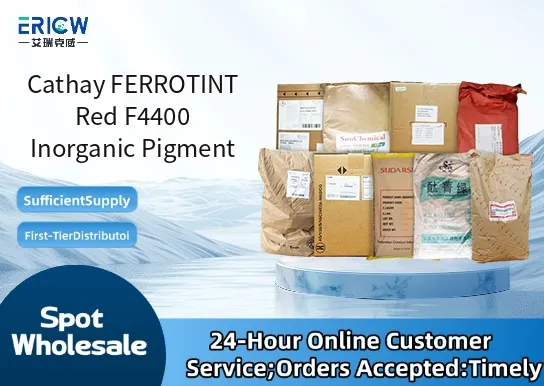
High thermal stability up to 800 °C, suitable for high-temperature ceramic and enamel applications.
Excellent lightfastness and weather resistance, maintaining color integrity under prolonged UV exposure.
Non-toxic and heavy-metal-free formulation compliant with global regulatory standards including EN 71-3 and RoHS.
Superior dispersibility in aqueous and solvent-based systems, enabling uniform color development with low grinding energy.
Chemically inert in alkaline and acidic environments, ensuring compatibility with cementitious and plaster-based matrices.
Ceramic glazes and frits for tableware, tiles, and sanitaryware.
Architectural coatings and façade renders requiring long-term color retention.
Concrete and precast concrete products, including paving stones and decorative elements.
High-performance enamels for domestic appliances and industrial equipment.
Plastic compounds for outdoor applications where heat and UV stability are critical.
| Chemical Type | Iron oxide-based complex inorganic colored pigment (CICP) |
| Product Form | Free-flowing fine powder |
| Appearance | Reddish-brown powder with consistent granulation |
| Primary Applications | Ceramics, architectural coatings, concrete, enamels, plastics |
| Key Features | Heat stable, lightfast, chemically inert, non-toxic |
| Benefits | Color consistency across batches, low dosage requirement, minimal impact on matrix properties |
| Storage Conditions | Store in dry, cool, well-ventilated area; avoid moisture absorption |
| Regulatory Compliance | Compliant with REACH, RoHS, EN 71-3, and FDA indirect food contact guidelines (when used in specified applications) |
Q1: What is the primary chemical composition of Cathay FERROTINT Red F4400?
A: Cathay FERROTINT Red F4400 is an inorganic iron oxide-based red pigment, primarily composed of hematite (α-Fe₂O₃), engineered for high thermal stability and consistent chromatic performance in demanding industrial applications.
Q2: Is this pigment suitable for use in food-contact plastics or coatings?
A: Cathay FERROTINT Red F4400 is not certified for direct food-contact applications. It is intended for general industrial uses such as construction materials, architectural coatings, and non-regulated plastic masterbatches where regulatory compliance with food-contact standards is not required.
Q3: How does F4400 perform under high-temperature processing conditions?
A: As a thermally stable inorganic oxide pigment, F4400 retains its color integrity and structural integrity during high-temperature processing—such as extrusion, calendering, or ceramic firing—without significant fading, blooming, or decomposition.
Q4: Can F4400 be dispersed in water-based systems?
A: Yes, F4400 can be effectively dispersed in water-based systems with appropriate surfactants and dispersion aids. Its surface treatment supports good wetting and stabilization in aqueous media used for architectural paints, cementitious products, and latex formulations.
Q5: What is the typical dosage range when using F4400 in polymer compounds?
A: Dosage depends on the desired opacity, color strength, and base polymer matrix, but it is generally used at low concentrations—typically ranging from 0.1% to 2% by weight—to achieve optimal color development without compromising mechanical properties.
Contact With Us:
E-mail: wangxingqiang@ericwchem.com
Have a Questions? Call Us:
Add:
Building A1, Jiete Industrial Park, Huangpu District, Guangzhou City, Guangdong Province, China