English
 Español
 tiếng việt
 русский
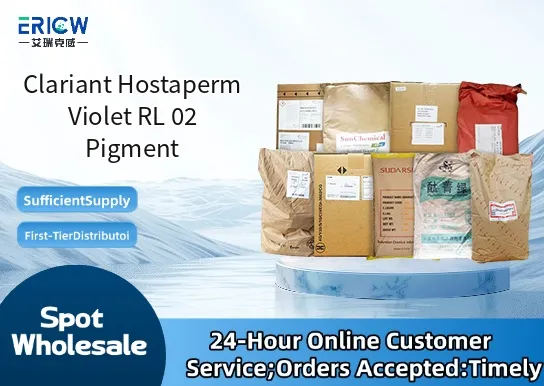
High chroma violet shade with excellent bluish undertone for vibrant, clean coloration.
Outstanding thermal stability up to 280 °C, suitable for demanding polymer processing conditions.
Excellent lightfastness and weather resistance (Xenon arc rated ≥6 on ISO 105-B02 scale).
Good dispersibility in both polar and non-polar media, enabling efficient incorporation in masterbatches.
Compliant with major global regulatory frameworks including REACH, RoHS, and FDA 21 CFR §178.3297 for food-contact plastics.
Polyolefin packaging films requiring high-color purity and UV durability.
Engineering plastics such as polyamide and polycarbonate for automotive interior components.
Household appliances housings where long-term color retention under indoor lighting is critical.
Technical fibers and spunbond nonwovens used in medical and filtration applications.
Injection-molded consumer electronics enclosures demanding consistent batch-to-batch hue match.
| Chemical Type | Quinacridone derivative |
| Product Form | Fine powder |
| Appearance | Violet-red crystalline powder |
| Primary Applications | Polyolefins, engineering thermoplastics, fibers |
| Key Features | High thermal stability, excellent lightfastness, good dispersibility |
| Benefits | Consistent shade reproducibility, low migration, broad processing window |
| Regulatory Status | REACH registered; RoHS compliant; FDA-listed for indirect food contact |
Q1: What is the primary chemical class and pigment type of Hostaperm Violet RL 02?
A: Hostaperm Violet RL 02 is a high-performance quinacridone-based organic pigment, classified under the Pigment Violet 19 (PV19) family. It exhibits excellent crystalline stability and is engineered for demanding coloristic and durability requirements in industrial applications.
Q2: Is this pigment suitable for use in food-contact plastics or packaging applications?
A: Hostaperm Violet RL 02 is not approved for direct food-contact applications under major global regulatory frameworks. It is intended for non-food-contact industrial uses such as automotive coatings, industrial paints, and engineering plastics where high lightfastness and thermal stability are required.
Q3: What is the typical dosage range when incorporating this pigment into polymer systems?
A: Dosage depends on the specific polymer matrix, desired shade strength, and processing conditions, but it is generally used at low concentrations—typically ranging from 0.1% to 2% by weight—to achieve optimal dispersion, color development, and cost-efficiency without compromising mechanical properties.
Q4: How does Hostaperm Violet RL 02 perform under elevated temperature during melt processing?
A: This pigment demonstrates good thermal stability and retains its coloristic integrity during standard polymer processing operations, including extrusion and injection molding up to approximately 280°C. Its performance remains consistent across common thermoplastics such as polyolefins and engineering resins when properly dispersed.
Q5: Can Hostaperm Violet RL 02 be used in aqueous coating systems?
A: While primarily optimized for solvent-based and high-solids systems, it can be formulated into aqueous dispersions with appropriate surfactants and stabilization technology. However, performance—especially in terms of gloss, rheology, and long-term storage stability—requires careful formulation optimization and compatibility testing.
Contact With Us:
E-mail: wangxingqiang@ericwchem.com
Have a Questions? Call Us:
Add:
Building A1, Jiete Industrial Park, Huangpu District, Guangzhou City, Guangdong Province, China