English
 Español
 tiếng việt
 русский
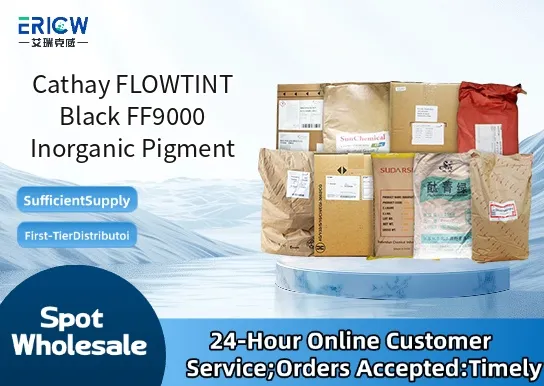
High thermal stability up to 800 °C, enabling use in high-temperature processing environments.
Excellent lightfastness and UV resistance, ensuring long-term color retention in outdoor applications.
Low oil absorption (< 25 g/100 g), facilitating efficient dispersion and improved formulation rheology.
Non-toxic and heavy-metal-free formulation, compliant with RoHS and REACH regulatory requirements.
Consistent particle size distribution for uniform tinting strength and minimal batch-to-batch variation.
Ceramic glazes and bodies for tableware, tiles, and sanitaryware.
High-performance architectural coatings requiring weather resistance and durability.
Engineering plastics including polyamide (PA), polypropylene (PP), and polyethylene (PE).
Specialty inks for industrial coding, ceramic decals, and heat-transfer printing.
Fire-resistant building materials such as intumescent coatings and mineral wool binders.
| Chemical Type | Complex metal oxide (Fe–Mn–Cr spinel-based) |
| Product Form | Free-flowing fine powder |
| Appearance | Jet-black granular powder |
| Primary Applications | Ceramics, plastics, coatings, inks, construction materials |
| Key Features | Thermal stability, chemical inertness, low volatility |
| Benefits | Color consistency, process compatibility, regulatory compliance |
| Density (g/cm³) | 4.8–5.2 |
| Moisture Content (wt%) | ≤ 0.5 |
Q1: What are the key advantages of Cathay FLOWTINT Black FF9000 compared to organic black pigments?
A: FF9000 offers superior thermal stability, excellent lightfastness, and strong resistance to chemical degradation—making it especially suitable for high-temperature processing (e.g., engineering thermoplastics) and outdoor applications where long-term color retention is critical. Unlike many organic blacks, it does not suffer from significant blooming or migration in polymer matrices.
Q2: Is FF9000 suitable for use in food-contact plastics?
A: FF9000 is an inorganic pigment based on mixed metal oxides and is widely used in food-contact compliant formulations when incorporated into approved polymer systems. Final regulatory compliance depends on the complete formulation, processing conditions, and applicable regional requirements—users should validate suitability with their regulatory team and perform required migration testing.
Q3: How does FF9000 perform in polyolefin compounds, particularly during high-shear compounding?
A: FF9000 demonstrates excellent dispersion stability and minimal plate-out tendency in polyolefins—even under demanding high-shear and high-temperature compounding conditions. Its surface treatment enhances compatibility with non-polar resins and supports consistent blackness and gloss without compromising mechanical properties.
Q4: Can FF9000 be used in water-based coatings or inks?
A: While primarily developed for thermoplastic and thermoset polymer systems, FF9000 can be adapted for aqueous dispersions with appropriate wetting and dispersing agents. Performance in water-based media depends heavily on pH stability, particle stabilization, and formulation rheology—pre-dispersed grades or custom milling may be recommended for optimal results.
Contact With Us:
E-mail: wangxingqiang@ericwchem.com
Have a Questions? Call Us:
Add:
Building A1, Jiete Industrial Park, Huangpu District, Guangzhou City, Guangdong Province, China