English
 Español
 tiếng việt
 русский
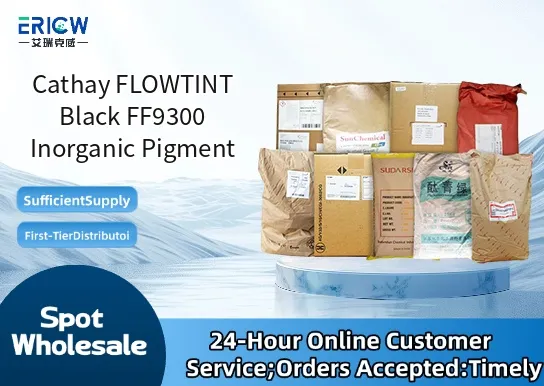
Highly stable iron oxide-based black pigment with excellent thermal stability up to 800 °C.
Non-toxic, heavy-metal-free formulation compliant with REACH and RoHS directives.
Superior lightfastness (ASTM Level 8) and weather resistance for long-term outdoor performance.
Optimized particle size distribution ensuring uniform dispersion and low viscosity in aqueous and solvent-based systems.
Low oil absorption (<18 g/100g) enabling high loading capacity without compromising flow or rheology.
Architectural and industrial coatings requiring durable, fade-resistant black coloration.
Plastic colorants for polyolefins, PVC, and engineering thermoplastics used in automotive and construction components.
Ceramic glazes and underglaze decorations where high-temperature stability is critical.
Concrete and mortar colorants for precast and ready-mix applications.
Inorganic pigment masterbatches for wire & cable sheathing and flame-retardant composites.
| Chemical Type | Iron oxide-based inorganic black pigment (Fe₃O₄ / γ-Fe₂O₃ hybrid) |
| Product Form | Free-flowing dry powder |
| Appearance | Jet-black, fine granular powder |
| Primary Applications | Coatings, plastics, ceramics, concrete, masterbatches |
| Key Features | Thermal stability, lightfastness, chemical inertness, low dusting |
| Benefits | Consistent batch-to-batch color, easy dispersibility, regulatory compliance |
| pH (5% aqueous slurry) | 6.5–7.5 |
| Volatile Matter (105 °C, 2 hrs) | ≤0.5 wt% |
Q1: What is the primary chemical composition of Cathay FLOWTINT Black FF9300?
A: Cathay FLOWTINT Black FF9300 is an inorganic black pigment based on a stabilized mixed-metal oxide system, engineered for high thermal stability and chemical inertness. Its exact formulation is proprietary, but it contains no heavy metals such as lead, cadmium, or mercury, and complies with major global regulatory expectations for general industrial use.
Q2: Is this pigment suitable for high-temperature polymer processing, such as polypropylene or engineering thermoplastics?
A: Yes — FF9300 is specifically developed for demanding melt-processing applications. It exhibits excellent thermal stability up to 300°C and maintains consistent dispersion and color strength during extrusion and injection molding of polyolefins, polyesters, and other engineering resins.
Q3: How does FF9300 compare to carbon black in terms of UV resistance and weathering performance?
A: Unlike organic blacks or standard carbon black, FF9300 offers superior UV stability and long-term outdoor durability due to its fully inorganic nature. It shows minimal fading or chalking under prolonged UV exposure and is especially preferred where carbon black’s potential dust hazards or electrical conductivity are undesirable.
Q4: Can FF9300 be used in food-contact plastics or toys?
A: While FF9300 is formulated without restricted heavy metals and demonstrates low extractability, it is not pre-approved for direct food-contact or toy applications under specific regional frameworks (e.g., FDA 21 CFR or EN71-3). End-use compliance must be verified by the compounder through full formulation testing and regulatory assessment.
Q5: What is the recommended method for incorporating FF9300 into polymer systems?
A: For optimal dispersion, FF9300 is typically introduced via masterbatch dilution or direct feeding using gravimetric dosing. Pre-dispersed masterbatches are widely used, and the pigment responds well to conventional compounding equipment—no special surface treatment or coupling agents are required for most polyolefin and polyester systems.
Contact With Us:
E-mail: wangxingqiang@ericwchem.com
Have a Questions? Call Us:
Add:
Building A1, Jiete Industrial Park, Huangpu District, Guangzhou City, Guangdong Province, China