English
 Español
 tiếng việt
 русский
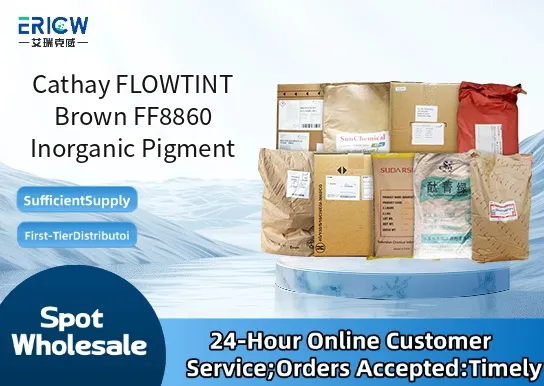
High thermal stability up to 1000°C, suitable for high-temperature ceramic and refractory applications.
Excellent lightfastness and UV resistance, ensuring long-term color retention in outdoor exposure.
Non-toxic and heavy-metal-free formulation compliant with global environmental regulations (RoHS, REACH).
Superior dispersion performance in aqueous and solvent-based systems without requiring additional dispersants.
Consistent batch-to-batch color strength and hue, supported by rigorous QC testing and ISO-certified manufacturing.
Ceramic glazes and bodies for tableware, tiles, and sanitaryware.
Architectural coatings and facade paints requiring weather-resistant brown tones.
Plastic coloration for automotive interior components and construction profiles.
Concrete and cement-based products including precast elements and terrazzo.
Specialty inks for industrial packaging and heat-transfer printing.
| Chemical Type | Mixed metal oxide (iron-manganese-chromium spinel) |
| Product Form | Fine dry powder |
| Appearance | Uniform reddish-brown free-flowing powder |
| Primary Applications | Ceramics, architectural coatings, plastics, concrete, inks |
| Key Features | Thermal stability, lightfastness, chemical inertness, low oil absorption |
| Benefits | Color consistency, regulatory compliance, ease of incorporation, minimal dust generation |
| pH (5% aqueous slurry) | 6.5–7.5 |
| Particle Size (D50) | 0.8–1.2 µm |
Q1: What is the primary chemical composition of Cathay FLOWTINT Brown FF8860?
A: Cathay FLOWTINT Brown FF8860 is an iron oxide-based inorganic pigment, formulated with stabilized α-Fe₂O₃ as the principal colorant, combined with controlled surface treatments to enhance dispersion and compatibility in polymer and coating systems.
Q2: Is this pigment suitable for use in food-contact plastics or packaging applications?
A: Cathay FLOWTINT Brown FF8860 is designed for general industrial applications including architectural coatings, construction materials, and non-food-contact plastics. It is not pre-qualified for direct food-contact use; regulatory compliance must be verified case-by-case with end-product testing and relevant local authority requirements.
Q3: How does FF8860 perform under high-temperature processing conditions, such as injection molding or extrusion?
A: As a thermally stable inorganic oxide pigment, FF8860 exhibits excellent resistance to thermal degradation up to typical polymer processing temperatures (e.g., ≤280°C), maintaining consistent color and minimal gas evolution—making it well-suited for polyolefins, PVC, and engineering thermoplastics.
Q4: What are the recommended dispersion methods for optimal color development in liquid systems?
A: For liquid coatings and inks, high-shear mixing or bead milling is recommended to achieve full deagglomeration. Pre-wetting with compatible solvents or resins prior to incorporation helps improve wetting efficiency and reduces viscosity spikes during dispersion.
Contact With Us:
E-mail: wangxingqiang@ericwchem.com
Have a Questions? Call Us:
Add:
Building A1, Jiete Industrial Park, Huangpu District, Guangzhou City, Guangdong Province, China