English
 Español
 tiếng việt
 русский
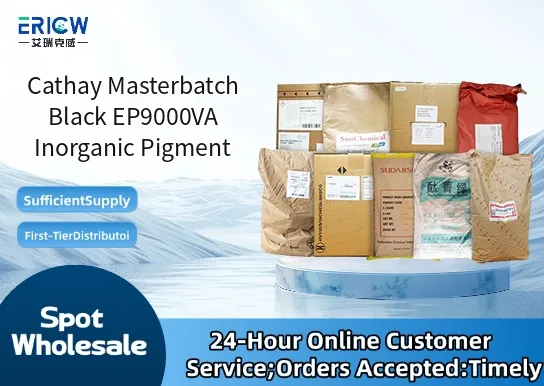
High thermal stability up to 300°C, suitable for demanding processing conditions including extrusion and injection molding.
Excellent dispersion performance in polyolefin and engineering thermoplastic matrices without agglomeration.
Non-migrating formulation ensures consistent color integrity and surface aesthetics over time.
Low dust generation during handling, enhancing workplace safety and operational cleanliness.
Compliant with global regulatory standards including RoHS and REACH for restricted substances.
Automotive interior components requiring long-term UV resistance and dimensional stability.
Food-contact-approved packaging films and containers (subject to final formulation validation).
Industrial pipes and fittings where chemical resistance and pigment permanence are critical.
Electrical enclosures and housings demanding ESD-safe black coloration and thermal robustness.
Outdoor construction profiles exposed to weathering, requiring superior lightfastness and chalking resistance.
| Chemical Type | Inorganic pigment masterbatch (iron oxide & carbon black hybrid system) |
| Product Form | Free-flowing granules |
| Appearance | Uniform matte black granules, free of visible specks or fines |
| Carrier Resin | PP-based (polypropylene), compatible with PP, PE, PS, and ABS |
| Recommended Loading Level | 1.5–3.0 wt% depending on substrate and opacity requirements |
| Volatile Content (max) | 0.3% at 105°C for 2 hours |
| Heavy Metals (Pb, Cd, Hg, Cr⁶⁺) | Below detection limit per EN 71-3 and RoHS Annex II |
| Storage Conditions | Store in dry, cool, well-ventilated area; shelf life 24 months from date of manufacture |
Q1: What is the primary pigment type used in EP9000VA, and why is it classified as an inorganic black masterbatch?
A: EP9000VA is formulated using high-performance inorganic black pigments—primarily iron oxide-based or mixed-metal oxide systems—selected for their thermal stability, chemical inertness, and resistance to UV degradation. Unlike carbon black, these pigments offer superior dispersion consistency and reduced dust generation during handling, making them suitable for demanding polymer processing environments.
Q2: Is EP9000VA compatible with engineering thermoplastics such as PBT, PPS, and polyamide (PA6/PA66)?
A: Yes, EP9000VA is specifically engineered for compatibility with high-temperature engineering resins. Its carrier system and surface treatment are optimized to ensure stable dispersion and minimal impact on mechanical properties—even under extended melt residence times typical in injection molding or extrusion of PBT, PPS, and polyamides.
Q3: How does EP9000VA perform in applications requiring food-contact compliance or low extractables?
A: EP9000VA is designed with non-volatile, non-migrating inorganic pigments and a carefully selected carrier resin that minimizes volatile organic compounds (VOCs) and extractable residues. While final regulatory approval depends on the full formulation and processing conditions, the base composition supports compliance pathways for food-contact applications where stringent extractables control is required.
Q4: What is the typical dosage range for EP9000VA in polymer systems, and how does it affect color strength and processing?
A: Dosage generally ranges from 0.1% to 2% by weight depending on the target blackness level, substrate opacity, and processing method. At lower loadings, EP9000VA delivers excellent jetness and uniformity without significantly increasing melt viscosity—making it well-suited for thin-wall molding and high-speed extrusion.
Contact With Us:
E-mail: wangxingqiang@ericwchem.com
Have a Questions? Call Us:
Add:
Building A1, Jiete Industrial Park, Huangpu District, Guangzhou City, Guangdong Province, China