English
 Español
 tiếng việt
 русский
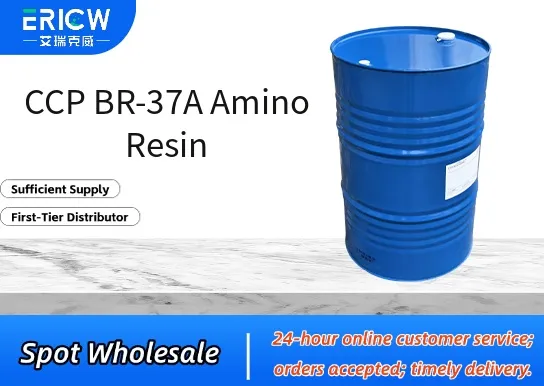
High reactivity with hydroxyl and carboxyl functional groups for efficient crosslinking.
Excellent storage stability in acidic aqueous solutions at ambient temperature.
Low formaldehyde emission profile, supporting VOC-compliant coating formulations.
Good compatibility with acrylic, polyester, and alkyd resin systems.
Enables rapid cure at moderate baking temperatures (120–150 °C).
Automotive OEM and refinish topcoats.
Industrial coil coatings for metal substrates.
Appliance finishes requiring high gloss and mar resistance.
General-purpose can coatings for food and beverage containers.
Wood furniture and panel coatings requiring durable film formation.
| Chemical Type | Methylolated melamine-formaldehyde resin |
| Product Form | Clear to pale yellow liquid |
| Appearance | Homogeneous, low-viscosity solution |
| Solvent Content | Water and isobutanol blend |
| pH (10% aqueous solution) | 7.5–8.5 |
| Solids Content (wt%) | 60 ± 1 |
| Viscosity (mPa·s, 25 °C) | 800–1200 |
| Key Features | Low free formaldehyde, acid-catalyzed cure, high crosslink density |
Q1: What is the primary function of CCP BR-37A in coating and ink formulations?
A: CCP BR-37A is a methylated amino resin designed to act as a crosslinking agent for hydroxyl- or carboxyl-functional resins (e.g., acrylics, alkyds, polyesters). It enhances hardness, chemical resistance, thermal stability, and cure speed under heat-assisted conditions.
Q2: Is CCP BR-37A compatible with waterborne systems?
A: Yes — CCP BR-37A exhibits good compatibility with many waterborne resin systems when properly formulated. It is commonly used in low-VOC industrial coatings where balanced reactivity and storage stability are required. Adjustments to pH, co-solvents, and catalyst selection may be needed to optimize performance.
Q3: How does CCP BR-37A compare to other melamine-formaldehyde resins in terms of reactivity and handling?
A: CCP BR-37A offers moderate reactivity — higher than highly etherified types but lower than partially methylated or butylated variants. This provides a favorable balance between pot life and cure efficiency, making it suitable for both coil coating and general-purpose baking applications without excessive volatility or premature gelation.
Q4: What catalysts are typically recommended to accelerate curing with CCP BR-37A?
A: Acidic catalysts such as p-toluenesulfonic acid (p-TSA), dinonylnaphthalene disulfonic acid (DNDSSA), or blocked acid catalysts are commonly used. Catalyst selection and dosage depend on substrate sensitivity, cure temperature profile, and desired film properties — generally ranging from 0.1% to 2% by weight relative to the amino resin.
Contact With Us:
E-mail: wangxingqiang@ericwchem.com
Have a Questions? Call Us:
Add:
Building A1, Jiete Industrial Park, Huangpu District, Guangzhou City, Guangdong Province, China