English
 Español
 tiếng việt
 русский
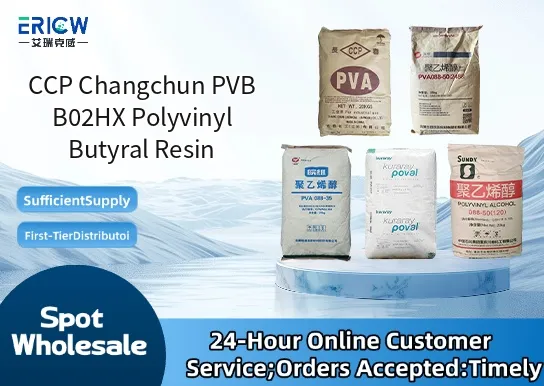
Excellent adhesion to glass and various substrates, ensuring robust interlayer bonding in laminated safety glass.
High optical clarity and low haze, meeting stringent requirements for automotive and architectural glazing.
Superior impact resistance and tear strength, contributing to enhanced safety performance under dynamic loading.
Good thermal stability and processing compatibility with standard lamination equipment (e.g., autoclave and nip-roll systems).
Consistent molecular weight distribution and controlled butyral content for reproducible film formation and mechanical properties.
Automotive laminated windshields and side windows.
Architectural safety glazing for facades, skylights, and overhead installations.
Security glazing in banks, government buildings, and high-risk facilities.
Photovoltaic module encapsulation layers for enhanced moisture barrier and mechanical protection.
Acoustic interlayers in noise-reducing laminated glass assemblies.
| Chemical Type | Polyvinyl butyral (PVB) resin |
| Product Form | Free-flowing granules |
| Appearance | Off-white to light yellow, uniform granular solid |
| Primary Applications | Laminated safety glass interlayer |
| Key Features | High adhesion, optical clarity, impact resistance |
| Benefits | Enhanced safety performance, process reliability, UV stability |
| Storage Conditions | Store in cool, dry, well-ventilated area; avoid direct sunlight and moisture |
| Shelf Life | 24 months from date of manufacture under recommended storage conditions |
Q1: What are the key performance advantages of CCP Changchun PVB B02HX compared to standard PVB resins?
A: CCP Changchun PVB B02HX offers enhanced film-forming capability and improved compatibility with polar polymers and plasticizers, resulting in superior interlayer adhesion and clarity in laminated safety glass applications. Its optimized molecular weight distribution also supports consistent melt processing and reduced haze in final films.
Q2: Is B02HX suitable for automotive laminated glass interlayers?
A: Yes — B02HX is specifically engineered for high-performance interlayer applications, including automotive windshields and architectural safety glazing. It delivers excellent optical transparency, UV stability, and mechanical toughness under dynamic loading conditions typical in vehicle safety systems.
Q3: How should B02HX be dried and handled prior to processing?
A: As with most PVB resins, B02HX is hygroscopic and requires careful moisture control. We recommend drying at 60–70 °C under vacuum or low-humidity air flow for 2–4 hours prior to extrusion or casting. Storage should be in sealed containers under dry, ambient conditions to prevent reabsorption of moisture.
Q4: Which plasticizers are commonly used with B02HX in interlayer formulations?
A: B02HX demonstrates good compatibility with conventional PVB plasticizers such as triethylene glycol di-2-ethylhexanoate (3GO) and dipropylene glycol dibenzoate (DPGDB). Formulators typically select plasticizer type and dosage based on target modulus, low-temperature flexibility, and long-term aging performance.
Contact With Us:
E-mail: wangxingqiang@ericwchem.com
Have a Questions? Call Us:
Add:
Building A1, Jiete Industrial Park, Huangpu District, Guangzhou City, Guangdong Province, China