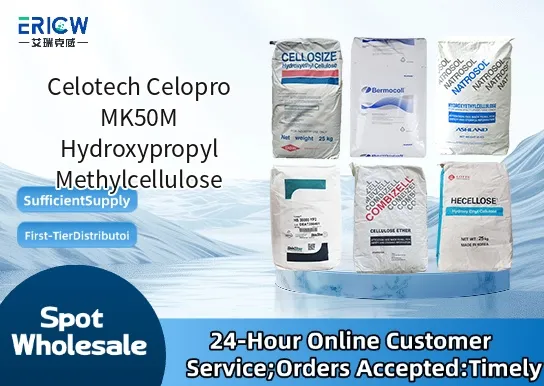
Highly effective thickener and rheology modifier for aqueous systems.
Excellent thermal gelation profile with reversible sol-gel transition at elevated temperatures.
Superior water retention capacity, enhancing workability and reducing cracking in cementitious applications.
Good compatibility with common construction additives including superplasticizers and retarders.
Consistent batch-to-batch performance ensured by strict GMP-aligned manufacturing control.
Tile adhesives and grouts for improved open time and sag resistance.
Self-leveling underlayments requiring controlled viscosity and extended flow retention.
Exterior insulation finishing systems (EIFS) for enhanced film formation and adhesion.
Dry-mix mortars including plaster, rendering, and repair mortars.
Water-based coatings and architectural paints as a stabilizer and co-thickener.
| Chemical Type | Hydroxypropyl methylcellulose (HPMC) |
| Product Form | White to off-white free-flowing powder |
| Appearance | Odorless, fine granular powder |
| Primary Applications | Cement-based and gypsum-based building materials |
| Key Features | High water retention, moderate viscosity, thermal gelation onset ~60–65°C |
| Benefits | Improved workability, reduced water demand, enhanced adhesion and crack resistance |
| Storage Conditions | Store in cool, dry place; protect from moisture and direct sunlight |
| Shelf Life | 24 months from date of manufacture when stored properly |
Q1: What is the primary functional role of Celotech Celopro MK50M in aqueous systems?
A: Celotech Celopro MK50M functions primarily as a non-ionic water-soluble thickener and rheology modifier. It provides excellent viscosity build-up, good shear-thinning behavior, and enhanced suspension stability in water-based formulations.
Q2: Is Celotech Celopro MK50M compatible with common industrial preservatives and electrolytes?
A: Yes, Celotech Celopro MK50M demonstrates good compatibility with widely used biocides and shows reasonable tolerance to low-to-moderate levels of salts. However, performance may vary depending on ion type and concentration—formulation testing under intended conditions is recommended.
Q3: How does temperature affect the viscosity performance of Celotech Celopro MK50M solutions?
A: Solutions exhibit typical thermogelling behavior: viscosity decreases gradually upon heating and may undergo reversible gelation at elevated temperatures. This characteristic supports applications requiring thermal responsiveness, such as controlled-release or hot-melt processing aids.
Q4: What are typical dosage ranges for Celotech Celopro MK50M in industrial coating and construction mortar formulations?
A: Dosage depends on formulation requirements and desired rheological profile, but it is typically used at low concentrations—generally ranging from 0.1% to 2% by weight of the total aqueous phase—to achieve effective thickening and anti-sag properties.
Contact With Us:
E-mail: wangxingqiang@ericwchem.com
Have a Questions? Call Us:
Add:
Building A1, Jiete Industrial Park, Huangpu District, Guangzhou City, Guangdong Province, China
 English
 Español
 tiếng việt
 русский