English
 Español
 tiếng việt
 русский
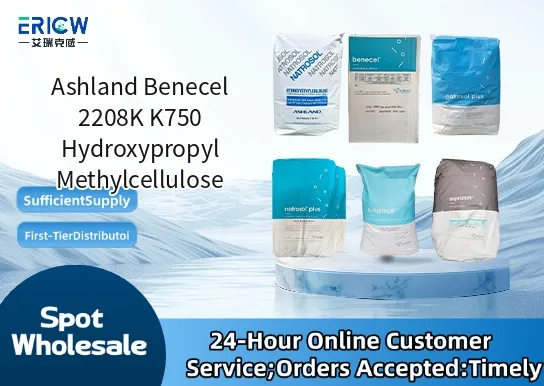
Excellent water solubility with rapid dispersion and low gelation temperature for efficient cold-water dissolution.
High viscosity stability across a broad pH range (3–11), ensuring consistent performance in diverse formulations.
Superior film-forming capability and surface adhesion, enhancing cohesion and workability in cementitious systems.
Low surface tension and effective air entrainment control, contributing to improved mortar workability and reduced segregation.
Thermally reversible gelation behavior, supporting controlled setting and extended open time in tile adhesives and renders.
Cement-based tile adhesives requiring extended adjustability and high slip resistance.
Dry-mix mortars including self-leveling underlayments and exterior insulation finishing systems (EIFS).
Gypsum-based plasters and joint compounds where smooth application and crack resistance are critical.
Grouts and repair mortars demanding precise water retention and minimized shrinkage.
Water-based coatings and texture finishes requiring rheology control and sag resistance.
| Chemical Type | Hydroxypropyl Methylcellulose (HPMC) |
| Product Form | White to off-white free-flowing powder |
| Appearance | Fine, homogeneous granular powder |
| Primary Applications | Tile adhesives, dry-mix mortars, plaster, grouts, and water-based coatings |
| Key Features | High water retention, excellent viscosity build, pH stability, cold-water soluble |
| Benefits | Improved workability, extended open time, enhanced adhesion, reduced cracking |
| Viscosity (2% aqueous solution, 20°C) | Approx. 25,000–30,000 mPa·s |
| Substitution Pattern | Standard HPMC (Methoxy ~28–30%, Hydroxypropoxy ~4–6%) |
Contact With Us:
E-mail: wangxingqiang@ericwchem.com
Have a Questions? Call Us:
Add:
Building A1, Jiete Industrial Park, Huangpu District, Guangzhou City, Guangdong Province, China