English
 Español
 tiếng việt
 русский
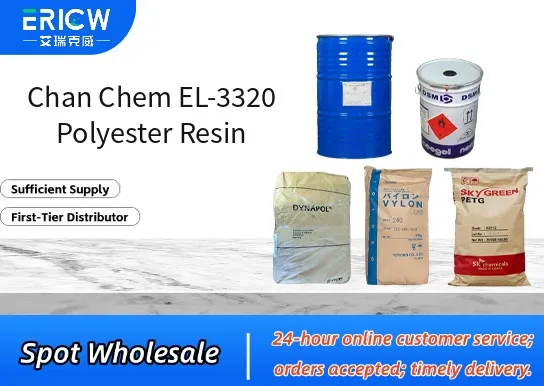
High reactivity with standard MEKP initiators for rapid room-temperature cure.
Excellent thixotropic stability—minimizes sagging and drip in vertical applications.
Low volatile organic compound (VOC) content, compliant with modern environmental regulations.
Superior mechanical strength and impact resistance after full cure.
Good compatibility with common fillers, pigments, and fiberglass reinforcements.
Fiberglass-reinforced plastic (FRP) tanks and chemical storage vessels.
Marine deck laminates and boat hull lay-up systems.
Industrial corrosion-resistant linings and secondary containment structures.
Wind turbine blade bonding and structural composite assemblies.
Architectural cladding panels and decorative molded components.
| Chemical Type | Unsaturated orthophthalic polyester resin |
| Product Form | Liquid, ready-to-use |
| Appearance | Clear to pale yellow, homogeneous liquid |
| Viscosity (25°C, mPa·s) | 450–650 |
| Gel Time (with 1.0% MEKP, 25°C) | 12–18 minutes |
| Solid Content (% w/w) | 99.5–100.0 |
| Density (25°C, g/cm³) | 1.12–1.16 |
| Primary Applications | Structural FRP laminating and casting |
Q1: What is the primary application field for EL-3320?
A: EL-3320 is a medium-reactivity unsaturated polyester resin designed primarily for ambient-cure and low-energy UV-curable coating systems, especially in industrial wood finishes, plastic coatings, and decorative laminates where balanced hardness, flexibility, and gloss retention are required.
Q2: Is EL-3320 compatible with common free-radical photoinitiators?
A: Yes, EL-3320 exhibits good reactivity with standard Type I (e.g., α-hydroxy ketones) and Type II (e.g., benzophenone derivatives) photoinitiators under UV-A/UV-Vis exposure. Compatibility and cure speed depend on initiator selection, film thickness, and irradiation conditions.
Q3: How should EL-3320 be stored to maintain stability?
A: Store in tightly sealed original containers at temperatures between 10–25 °C, away from direct sunlight, strong oxidizers, and sources of heat or ignition. Prolonged exposure to elevated temperatures or moisture may affect viscosity and shelf life.
Q4: Can EL-3320 be blended with other resins or monomers?
A: Yes, EL-3320 is miscible with common reactive diluents (e.g., styrene, vinyl toluene) and can be co-formulated with acrylic resins, epoxy acrylates, or other unsaturated polyesters—subject to compatibility testing to ensure phase stability and desired performance attributes.
Contact With Us:
E-mail: wangxingqiang@ericwchem.com
Have a Questions? Call Us:
Add:
Building A1, Jiete Industrial Park, Huangpu District, Guangzhou City, Guangdong Province, China