English
 Español
 tiếng việt
 русский
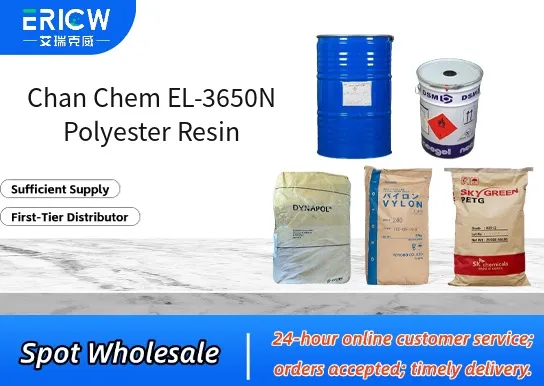
High reactivity with standard MEKP catalysts for rapid gel time control in ambient-cure processes.
Excellent thixotropic stability—minimizes sagging and slumping during vertical or overhead application.
Low styrene emission formulation, supporting improved workplace air quality and regulatory compliance (VOC < 380 g/L).
Superior mechanical strength retention after water immersion, ideal for demanding marine and outdoor environments.
Broad compatibility with common fillers, pigments, and fiberglass reinforcements without compromising dispersion or cure integrity.
Fiberglass-reinforced plastic (FRP) tanks and chemical storage vessels.
Marine hulls, decks, and superstructures requiring high hydrolytic resistance.
Industrial corrosion-resistant linings and secondary containment systems.
Wind turbine blade structural components and nacelle housings.
Architectural cladding panels and translucent roofing systems.
| Chemical Type | Unsaturated orthophthalic polyester resin |
| Product Form | Liquid, ready-to-use |
| Appearance | Clear to pale yellow, homogeneous liquid |
| Viscosity (25°C, mPa·s) | 450–650 |
| Acid Value (mg KOH/g) | 12–18 |
| Styrene Content (wt %) | 38–42 |
| Density (25°C, g/cm³) | 1.12–1.16 |
| Shelf Life (unopened, 20–25°C) | 6 months |
Q1: What is the primary application niche for EL-3650N?
A: EL-3650N is specially formulated as a low-viscosity, high-reactivity unsaturated polyester resin optimized for fiber-reinforced composite manufacturing—particularly in pultrusion and continuous lamination processes where rapid gelation, excellent fiber wet-out, and dimensional stability are critical.
Q2: How does EL-3650N compare to standard orthophthalic resins in terms of mechanical performance?
A: EL-3650N delivers enhanced tensile and flexural strength retention after post-cure, along with improved interlaminar shear resistance—attributable to its tailored molecular architecture and controlled crosslink density. It typically outperforms conventional orthophthalic resins in structural applications requiring long-term load-bearing capability.
Q3: What types of initiators and accelerators are recommended for optimal cure profile?
A: EL-3650N responds well to standard methyl ethyl ketone peroxide (MEKP) initiators. For ambient or low-temperature processing, cobalt-based accelerators are commonly used; for elevated-temperature systems (e.g., pultrusion dies), non-cobalt alternatives such as tertiary amine or acetylacetonate complexes may be preferred to support consistent through-cure without premature surface inhibition.
Q4: Is EL-3650N suitable for applications requiring UV resistance?
A: While EL-3650N provides good baseline weatherability, it is not inherently UV-stabilized. For outdoor or prolonged sunlight exposure, integration of HALS (hindered amine light stabilizers) and UV absorbers into the final formulation—or application of a protective gel coat—is strongly recommended to maintain long-term gloss retention and mechanical integrity.
Contact With Us:
E-mail: wangxingqiang@ericwchem.com
Have a Questions? Call Us:
Add:
Building A1, Jiete Industrial Park, Huangpu District, Guangzhou City, Guangdong Province, China