English
 Español
 tiếng việt
 русский
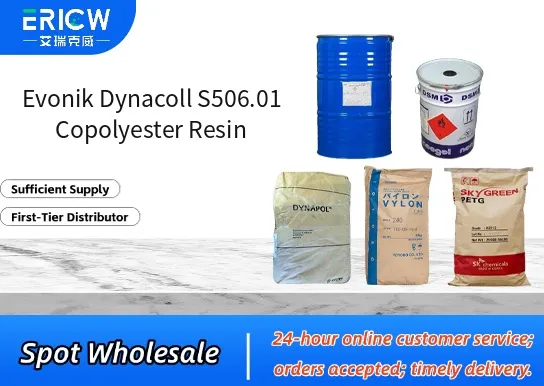
High thermal stability with excellent melt viscosity control for consistent processing.
Outstanding adhesion to polar substrates including PET, PA, and aluminum foil.
Low extractables and excellent compatibility with food-contact compliant formulations.
Good flexibility and toughness at low temperatures without sacrificing tensile strength.
Designed for solvent-free hot-melt applications requiring rapid setting and high bond integrity.
Flexible packaging laminates for retortable and microwaveable pouches.
High-performance hot-melt adhesives for automotive interior trim bonding.
Multi-layer coextrusion adhesive layers in barrier film structures.
Specialty labels requiring resistance to plasticizers and low-temperature flexibility.
Medical device packaging where sterilization stability and biocompatibility are critical.
| Chemical Type | Aliphatic-aromatic copolyester |
| Product Form | Pellets |
| Appearance | Off-white to light beige, semi-crystalline granules |
| Melt Flow Rate (MFR, 230 °C/2.16 kg) | 25–35 g/10 min |
| Softening Point (Vicat, 50 N) | 85–92 °C |
| Density (23 °C) | 1.18–1.22 g/cm³ |
| Moisture Content (as received) | < 0.15 wt% |
| Primary Applications | Hot-melt adhesive component for flexible packaging and technical laminates |
Q1: What is the primary function of Dynacoll S506.01 in hot melt adhesive formulations?
A: Dynacoll S506.01 is a reactive copolyester resin designed to enhance cohesion, heat resistance, and open time in reactive hot melt adhesives—particularly those based on polyurethane prepolymers. It contributes to improved green strength and thermal stability without compromising processability.
Q2: Is Dynacoll S506.01 compatible with common polyurethane-based reactive hot melts?
A: Yes, Dynacoll S506.01 is specifically engineered for compatibility with aliphatic and aromatic polyurethane prepolymers. It disperses homogeneously upon melting and supports crosslinking development during post-application curing.
Q3: How does Dynacoll S506.01 affect processing temperature and viscosity?
A: This copolyester resin typically lowers the overall melt viscosity of reactive systems at application temperatures (e.g., 120–160 °C), improving pumpability and sprayability. Its softening behavior supports extended open time while maintaining sufficient tack and early grab.
Q4: What are recommended handling and storage conditions?
A: Store in original sealed packaging at temperatures below 30 °C, protected from moisture and direct sunlight. Avoid prolonged exposure to ambient humidity prior to use, as this resin may absorb trace moisture that could affect reactivity in sensitive PU systems.
Contact With Us:
E-mail: wangxingqiang@ericwchem.com
Have a Questions? Call Us:
Add:
Building A1, Jiete Industrial Park, Huangpu District, Guangzhou City, Guangdong Province, China