English
 Español
 tiếng việt
 русский
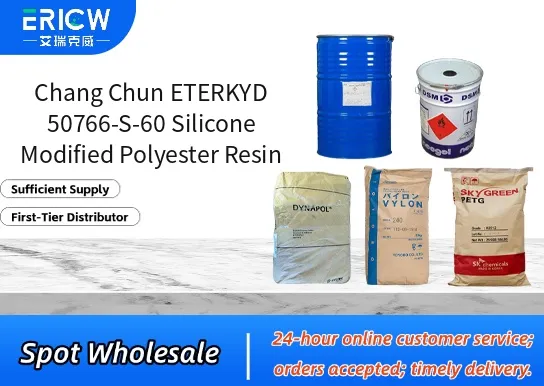
Enhanced weather resistance due to silicone modification, significantly improving UV stability and gloss retention.
Excellent flexibility and impact resistance, enabling durable coatings on substrates subject to thermal cycling or mechanical stress.
Good compatibility with melamine formaldehyde crosslinkers and standard polyester resin systems for formulation versatility.
Low viscosity profile facilitates easy handling, solvent reduction, and high-solids formulation development.
Superior thermal stability up to 200°C, supporting high-bake industrial coating applications.
High-performance coil coatings for architectural and appliance metal substrates.
Premium exterior metal roofing and wall panel coatings requiring long-term color and gloss stability.
Automotive trim and under-hood components requiring heat-resistant decorative finishes.
Industrial maintenance coatings for infrastructure exposed to harsh outdoor environments.
Pre-finished aluminum composite materials (ACM) and extrusion coatings.
| Chemical Type | Silicone-modified polyester resin |
| Product Form | Liquid |
| Appearance | Clear to pale yellow viscous liquid |
| Primary Applications | Coil coating, architectural metal finishing, high-durability industrial coatings |
| Key Features | UV resistance, thermal stability, flexibility, crosslinker compatibility |
| Recommended Crosslinker | Melamine-formaldehyde resins (e.g., high-alkylated types) |
| Storage Stability | 12 months at 25°C in sealed original container |
| VOC Content | Typically < 350 g/L when formulated per standard high-solids guidelines |
Q1: What is the primary functional benefit of silicone modification in this polyester resin?
A: The silicone modification enhances surface migration and film formation, resulting in improved mar resistance, reduced surface tension, and better substrate wetting—particularly beneficial for high-gloss coil coating and metal finishing applications.
Q2: Is ETERKYD 50766-S-60 compatible with conventional polyester or acrylic crosslinkers?
A: Yes, it is formulated to be compatible with standard amino resins (e.g., melamine-formaldehyde) and can also be used with isocyanate-based curing systems, depending on the desired cure schedule and performance requirements.
Q3: How does this resin perform under accelerated weathering conditions?
A: Due to its silicone-polyester hybrid structure, it demonstrates enhanced UV stability and chalk resistance compared to unmodified polyesters, supporting extended service life in outdoor architectural and industrial coating applications.
Q4: Can this resin be used in low-VOC or high-solids formulations?
A: Yes—it is suitable for formulation into medium-to-high solids solventborne systems and can support VOC reduction strategies when combined with appropriate solvents and reactive diluents, without compromising film integrity or cure response.
Contact With Us:
E-mail: wangxingqiang@ericwchem.com
Have a Questions? Call Us:
Add:
Building A1, Jiete Industrial Park, Huangpu District, Guangzhou City, Guangdong Province, China