English
 Español
 tiếng việt
 русский
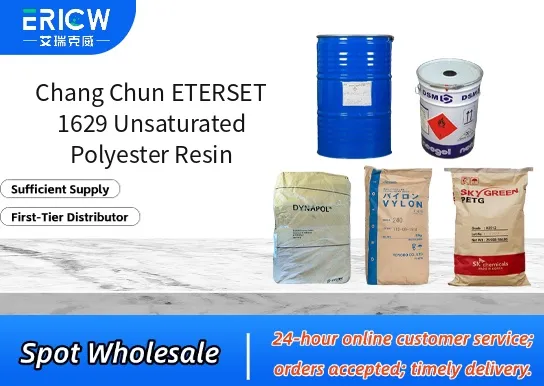
High reactivity with standard peroxide initiators for rapid gelation and efficient production cycles.
Excellent mechanical strength and dimensional stability in cured laminates.
Good compatibility with common fillers, pigments, and glass fiber reinforcements.
Low viscosity for easy handling, wet-out, and impregnation of fiber mats.
Superior weather resistance and UV stability in outdoor applications.
Fiberglass-reinforced plastic (FRP) tanks and vessels for chemical storage.
Marine components including boat hulls, decks, and structural panels.
Industrial corrosion-resistant linings and secondary containment systems.
Wind turbine blade structural matrices and nacelle housings.
Architectural cladding, grating, and decorative molded products.
| Chemical Type | Orthophthalic unsaturated polyester resin |
| Product Form | Liquid, ready-to-use |
| Appearance | Clear to pale yellow viscous liquid |
| Viscosity (25°C) | 400–600 mPa·s |
| Gel Time (with 1.0% MEKP, 25°C) | 12–18 minutes |
| Solid Content | ≈99.5% |
| Density (25°C) | 1.12–1.15 g/cm³ |
| Reactive Diluent | Styrene (35–40% w/w) |
Q1: What are the primary application areas for ETERSET 1629?
A: ETERSET 1629 is widely used in fiberglass-reinforced plastic (FRP) applications such as marine hulls, tanks, pipes, and corrosion-resistant industrial laminates. Its balanced reactivity and mechanical performance make it suitable for both hand lay-up and spray-up processes.
Q2: How should ETERSET 1629 be cured, and what initiators are recommended?
A: Curing is typically achieved using organic peroxides such as methyl ethyl ketone peroxide (MEKP) at ambient or elevated temperatures. The choice and dosage of initiator depend on processing conditions, part thickness, and desired gel time—formulators commonly adjust for optimal throughput and final properties.
Q3: Is ETERSET 1629 compatible with common fillers and reinforcements?
A: Yes—it demonstrates good compatibility with standard mineral fillers (e.g., calcium carbonate, talc), pigments, and glass fiber reinforcements including chopped strand mat, woven roving, and continuous filament. Proper dispersion and wet-out are generally achieved with standard mixing protocols.
Q4: Does ETERSET 1629 require post-cure treatment to achieve full performance?
A: Post-cure is not mandatory for most structural applications, but may be applied to enhance thermal stability, chemical resistance, or long-term mechanical retention—especially in thick-section or high-performance service environments.
Contact With Us:
E-mail: wangxingqiang@ericwchem.com
Have a Questions? Call Us:
Add:
Building A1, Jiete Industrial Park, Huangpu District, Guangzhou City, Guangdong Province, China