English
 Español
 tiếng việt
 русский
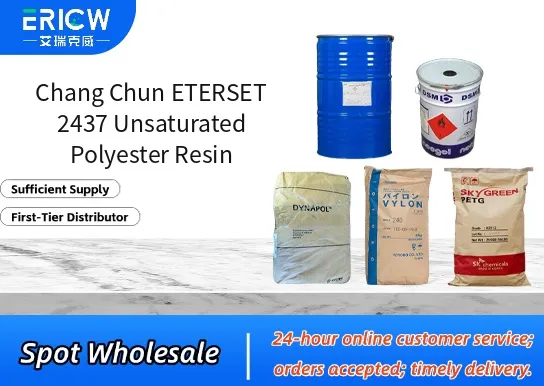
Excellent balance of mechanical strength and impact resistance for structural composite parts.
Good reactivity with standard MEKP initiators, enabling reliable room-temperature and elevated-temperature curing.
Low viscosity (250–350 mPa·s at 25°C) for enhanced fiber wet-out and improved processability in RTM, pultrusion, and hand lay-up.
Superior weathering resistance and UV stability due to optimized molecular structure and inhibitor package.
Consistent batch-to-batch quality with strict control over acid number, gel time, and styrene content.
Fiberglass-reinforced panels (FRP) for architectural cladding and façade systems.
Industrial tanks and chemical-resistant linings for water treatment and corrosion service.
Marine components including boat decks, hulls, and interior trim requiring dimensional stability and moisture resistance.
Transportation parts such as truck body panels, bus shelters, and rail interior composites.
Wind energy components including nacelle covers and blade fairings where surface finish and resin flow are critical.
| Chemical Type | Orthophthalic unsaturated polyester resin |
| Product Form | Liquid, homogeneous solution |
| Appearance | Clear to pale yellow, transparent liquid |
| Viscosity (25°C) | 250–350 mPa·s |
| Acid Number | 16–22 mg KOH/g |
| Styrene Content | 38–42 wt% |
| Gel Time (with 1.0% MEKP, 25°C) | 8–12 minutes |
| Density (25°C) | 1.10–1.14 g/cm³ |
Q1: What are the key performance characteristics of ETERSET 2437 compared to standard orthophthalic resins?
A: ETERSET 2437 is a high-reactivity, low-viscosity unsaturated polyester resin formulated for improved gel time control and enhanced mechanical properties in reinforced composites. It offers superior surface hardness, better chemical resistance, and reduced styrene emission during processing versus conventional orthophthalic systems.
Q2: Which initiators and accelerators are typically recommended for use with ETERSET 2437?
A: The resin is compatible with standard MEKP (methyl ethyl ketone peroxide) catalysts and cobalt-based accelerators. Optimal cure profiles are achieved using low-temperature or medium-temperature MEKP formulations, with accelerator dosage adjusted based on ambient conditions and required demould time.
Q3: Can ETERSET 2437 be used in marine-grade laminating applications?
A: Yes — it is widely employed in marine hull and deck laminates where balanced strength, moisture resistance, and dimensional stability are required. For critical structural components, it is typically combined with suitable glass reinforcements and post-cured under controlled conditions to maximize crosslink density.
Q4: How does ETERSET 2437 perform in thick-section casting applications?
A: Its optimized exotherm profile and moderate reactivity make it suitable for medium-thickness castings (e.g., countertops and sanitary ware), helping to minimize cracking and internal stress. For thicker sections, staged pouring or controlled ambient temperature management is advised to ensure uniform cure.
Contact With Us:
E-mail: wangxingqiang@ericwchem.com
Have a Questions? Call Us:
Add:
Building A1, Jiete Industrial Park, Huangpu District, Guangzhou City, Guangdong Province, China