English
 Español
 tiếng việt
 русский
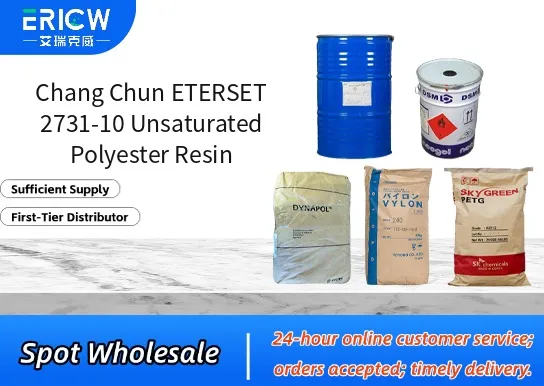
Excellent mechanical strength and dimensional stability after curing.
Good compatibility with standard MEKP catalysts and low-profile additives.
Optimized viscosity for efficient fiber wet-out in reinforced composites.
Consistent reactivity profile enabling reliable processing across batch runs.
Low styrene emission formulation supporting improved workplace safety and regulatory compliance.
Fiberglass-reinforced plastic (FRP) tanks and chemical storage vessels.
Pultruded profiles for structural supports and corrosion-resistant framing.
Sheet molding compound (SMC) for automotive under-hood components.
Centrifugal casting of pipes and ducts in wastewater and industrial fluid handling systems.
Hand lay-up and spray-up fabrication of marine decks, hulls, and fenders.
| Chemical Type | Unsaturated polyester resin (orthophthalic-based) |
| Product Form | Liquid, ready-to-use |
| Appearance | Clear to pale yellow viscous liquid |
| Viscosity (25°C) | 450–650 mPa·s |
| Acid Value | 18–22 mg KOH/g |
| Gel Time (with 1.0% MEKP, 25°C) | 12–18 minutes |
| Styrene Content | 38–42 wt% |
| Specific Gravity (25°C) | 1.11–1.13 g/cm³ |
Q1: What are the key handling and storage recommendations for ETERSET 2731-10?
A: Store in a cool, dry, and well-ventilated area away from direct sunlight, heat sources, and strong oxidizers. Keep containers tightly sealed to prevent moisture ingress and premature viscosity increase. For optimal shelf life, avoid prolonged exposure to temperatures above 30°C.
Q2: Which initiators are commonly used with ETERSET 2731-10 in room-temperature curing applications?
A: This resin is typically cured using organic peroxides such as methyl ethyl ketone peroxide (MEKP) or benzoyl peroxide (BPO), depending on the required gel time and ambient conditions. Catalyst selection and dosage should be optimized based on formulation goals, thickness, and environmental temperature.
Q3: Is ETERSET 2731-10 suitable for fiberglass-reinforced composites requiring high mechanical strength and dimensional stability?
A: Yes — it is formulated to deliver balanced toughness, good adhesion to glass fibers, and low shrinkage during cure, making it well-suited for structural laminates, marine components, and industrial panels where consistent performance and post-cure stability are critical.
Q4: Can this resin be blended with other unsaturated polyester resins or additives to modify performance?
A: It is generally compatible with common UP resin modifiers, such as styrene diluents, thixotropic agents, and pigment pastes. However, compatibility testing is recommended before full-scale blending, especially with reactive additives or alternative monomers, to ensure predictable cure behavior and final properties.
Contact With Us:
E-mail: wangxingqiang@ericwchem.com
Have a Questions? Call Us:
Add:
Building A1, Jiete Industrial Park, Huangpu District, Guangzhou City, Guangdong Province, China