English
 Español
 tiếng việt
 русский
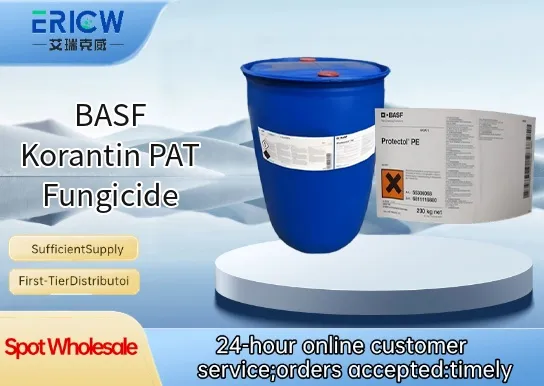
Broad-spectrum activity against key foliar and soil-borne fungal pathogens including Botrytis, Fusarium, and Rhizoctonia.
Systemic and protective action with translaminar movement for extended residual control.
Low application rates enabled by high active ingredient efficacy and optimized formulation stability.
Compatible with integrated pest management (IPM) programs and demonstrates favorable environmental profile.
Minimal phytotoxicity on sensitive crops when applied according to label recommendations.
Greenhouse and open-field tomato cultivation for early blight and gray mold control.
Protected cucumber production targeting powdery mildew and root rot complexes.
Strawberry nurseries and fruiting fields managing anthracnose and Botrytis cinerea.
Leafy greens (e.g., lettuce, spinach) for prevention of downy mildew and damping-off.
Ornamental bedding plants and potted flowering species in commercial nurseries.
| Chemical Type | Strobilurin-class fungicide (active ingredient: Trifloxystrobin) |
| Product Form | Flowable concentrate (SC) |
| Appearance | Off-white to light beige suspension |
| Active Ingredient Content | 250 g/L Trifloxystrobin |
| pH Range (1% aqueous solution) | 6.0 – 7.5 |
| Density (20°C) | 1.12 – 1.18 g/cm³ |
| Storage Stability | ≥24 months at 5–30°C in original unopened container |
| Primary Applications | Foliar spray; seed treatment (when formulated accordingly); drench applications |
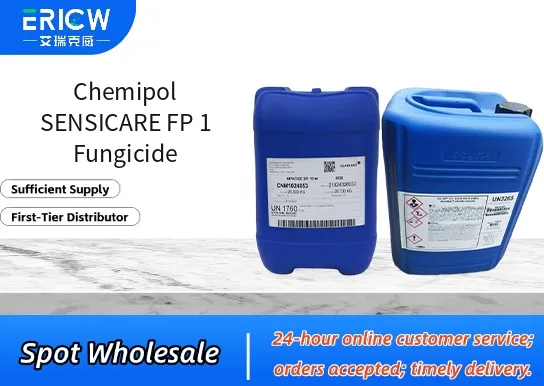
Q1: What types of polymers is Chemipol SENSICARE FP 1 compatible with?
A: Chemipol SENSICARE FP 1 is formulated for compatibility with a broad range of thermoplastics and elastomers, including polyolefins (e.g., PP, PE), PVC, TPEs, and certain engineering plastics. Compatibility should be confirmed through preliminary compatibility and migration testing under intended processing and end-use conditions.
Q2: How does Chemipol SENSICARE FP 1 provide long-term antifungal protection in polymer applications?
A: It functions via controlled release and surface enrichment mechanisms, enabling sustained biostatic activity against common fungi such as Aspergillus and Penicillium species. Its molecular design supports thermal stability during melt processing and resistance to leaching in humid or wet environments.
Q3: Is Chemipol SENSICARE FP 1 suitable for use in products requiring regulatory compliance for food contact or healthcare applications?
A: Chemipol SENSICARE FP 1 is designed for industrial and functional polymer applications where antimicrobial performance is critical. It is not pre-approved for direct food-contact or medical device applications under major global regulatory frameworks; customers must conduct full regulatory due diligence—including toxicological assessment and application-specific compliance verification—prior to commercial use in regulated markets.
Q4: What is the typical dosage range for optimal antifungal efficacy?
A: Dosage depends on polymer type, processing conditions, required performance level, and environmental exposure. It is typically used at low concentrations—generally ranging from 0.1% to 2% by weight—and optimized through laboratory-scale trials and real-world performance validation.
Contact With Us:
E-mail: wangxingqiang@ericwchem.com
Have a Questions? Call Us:
Add:
Building A1, Jiete Industrial Park, Huangpu District, Guangzhou City, Guangdong Province, China