English
 Español
 tiếng việt
 русский
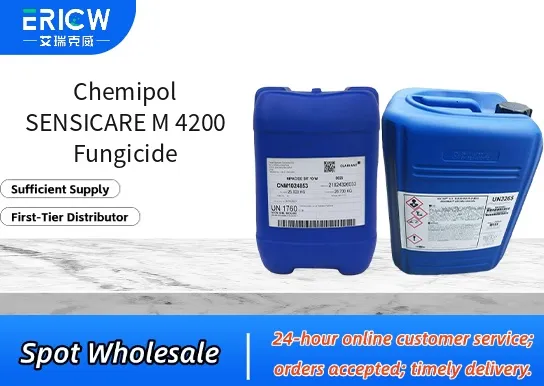
Broad-spectrum fungicidal activity against key ascomycete and basidiomycete pathogens.
Systemic and protective action with translaminar movement for extended residual control.
Low mammalian toxicity and favorable environmental profile, supporting sustainable crop protection programs.
Compatible with major adjuvants and commonly used insecticides and herbicides in tank mixes.
Stable under a wide pH range (5.0–8.5), ensuring consistent performance in diverse spray solutions.
Preventive and curative treatment of powdery mildew in greenhouse vegetables and ornamentals.
Control of leaf spot diseases (e.g., Cercospora spp.) in field-grown lettuce and spinach.
Management of rust fungi (e.g., Puccinia spp.) on cereal crops during early vegetative stages.
Protection of high-value horticultural crops including strawberries and cucumbers in protected cultivation.
| Chemical Type | Triazole-class systemic fungicide (active ingredient: metconazole) |
| Product Form | Emulsifiable concentrate (EC) |
| Appearance | Light amber to pale yellow clear liquid |
| Active Ingredient Concentration | 420 g/L metconazole |
| Density (20°C) | Approx. 1.08 g/cm³ |
| pH Range (1% aqueous solution) | 6.0 – 7.5 |
| Solubility in Water | Partially miscible (forms stable emulsion) |
| Storage Stability | ≥24 months at 5–30°C in original unopened container |
Q1: What types of polymers is Chemipol SENSICARE M 4200 compatible with?
A: Chemipol SENSICARE M 4200 is designed for use in thermoplastic polymers, particularly polyolefins (e.g., PP and PE), as well as engineering plastics such as ABS, PS, and certain polyesters. Compatibility should be confirmed via preliminary compatibility testing under intended processing conditions.
Q2: How is Chemipol SENSICARE M 4200 typically incorporated into polymer formulations?
A: It is commonly introduced during compounding via masterbatch or direct melt blending. Due to its thermal stability, it withstands standard extrusion and injection molding temperatures without significant degradation. Pre-drying is generally not required, but storage under dry, cool conditions is recommended to maintain performance consistency.
Q3: Does Chemipol SENSICARE M 4200 affect the mechanical or optical properties of finished parts?
A: When used within the recommended dosage range, it typically shows minimal impact on tensile strength, impact resistance, or clarity—especially in transparent or semi-crystalline systems. However, final property effects depend on base resin, processing parameters, and overall additive package, so application-specific validation is advised.
Q4: Is Chemipol SENSICARE M 4200 suitable for applications requiring long-term antimicrobial protection?
A: Yes—it provides durable, leach-resistant fungicidal activity that remains effective throughout the intended service life of the polymer product, including under humid or warm ambient conditions. Its mode of action is primarily surface- and matrix-based inhibition of fungal growth rather than rapid biocide release.
Contact With Us:
E-mail: wangxingqiang@ericwchem.com
Have a Questions? Call Us:
Add:
Building A1, Jiete Industrial Park, Huangpu District, Guangzhou City, Guangdong Province, China