English
 Español
 tiếng việt
 русский
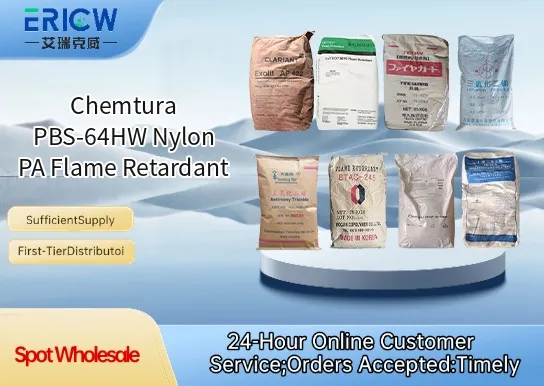
Halogen-free formulation compliant with RoHS and REACH regulations.
Excellent thermal stability for processing in high-temperature nylon (PA6, PA66) compounding.
Low smoke density and reduced toxic gas emission during combustion.
Maintains good mechanical properties—including tensile strength and impact resistance—in flame-retarded nylon compounds.
Good dispersion and compatibility with polyamide matrices without significant degradation of melt flow.
Electrical and electronic connectors requiring UL 94 V-0 rating.
Automotive under-hood components such as sensor housings and fuse boxes.
Consumer appliance housings including power tools and kitchen appliances.
Industrial control enclosures and junction boxes exposed to elevated ambient temperatures.
3D printing filaments based on flame-retarded nylon for functional prototyping.
| Chemical Type | Phosphorus-based halogen-free flame retardant |
| Product Form | Free-flowing white granules |
| Appearance | Off-white to light beige granular solid |
| Primary Applications | Flame retardancy for polyamide 6 and polyamide 66 |
| Key Features | UL 94 V-0 achievable at 15–20 wt% loading in PA6/PA66 |
| Benefits | Improved comparative tracking index (CTI ≥ 600 V) and reduced afterglow |
| Processing Temperature Range | 240–280 °C (recommended for extrusion and injection molding) |
| Storage Conditions | Store in dry, cool conditions; protect from moisture absorption |
Q1: What is the primary polymer matrix compatibility of PBS-64HW?
A: PBS-64HW is specifically engineered for use in polyamide (PA) systems, particularly nylon 6 and nylon 66. It demonstrates excellent dispersion and thermal stability during melt processing of these engineering thermoplastics.
Q2: How does PBS-64HW achieve flame retardancy without halogenated chemistry?
A: PBS-64HW is a phosphorus-based flame retardant that functions primarily through condensed-phase mechanisms—promoting char formation and reducing fuel release during thermal decomposition. Its non-halogenated composition supports compliance with evolving environmental and regulatory expectations for halogen-free materials.
Q3: Is PBS-64HW suitable for applications requiring good mechanical property retention after flame retardant addition?
A: Yes—PBS-64HW is formulated to minimize adverse effects on tensile strength, impact resistance, and elongation in reinforced and unreinforced PA compounds. Performance retention depends on overall formulation balance, including stabilizers and fillers, but it is widely selected where maintaining structural integrity alongside flame performance is critical.
Q4: What processing conditions are recommended for optimal dispersion of PBS-64HW in nylon?
A: PBS-64HW is designed for standard melt compounding processes used with nylons—including twin-screw extrusion at typical barrel temperatures between 240 °C and 280 °C. Good dispersion is achieved with moderate shear and residence time; pre-drying of both the nylon resin and PBS-64HW is recommended to prevent hydrolytic degradation.
Q5: Can PBS-64HW be used in combination with other additives such as glass fiber or impact modifiers?
A: Yes—PBS-64HW is compatible with common nylon additives including glass fibers, mineral fillers, and impact modifiers. However, additive interactions should be evaluated empirically in the final formulation, as synergistic or antagonistic effects on flame performance, rheology, or long-term stability may occur.
Contact With Us:
E-mail: wangxingqiang@ericwchem.com
Have a Questions? Call Us:
Add:
Building A1, Jiete Industrial Park, Huangpu District, Guangzhou City, Guangdong Province, China