English
 Español
 tiếng việt
 русский
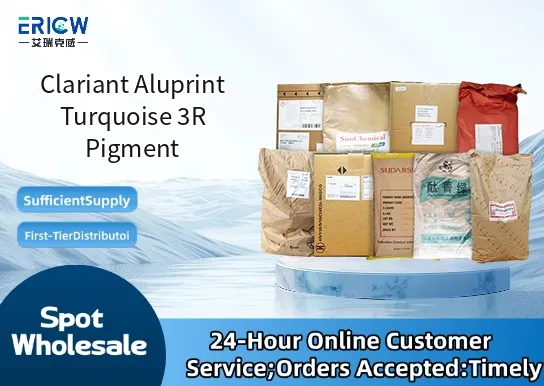
High chroma turquoise shade with excellent lightfastness and weather resistance.
Optimized for use in solvent-based and UV-curable aluminum effect coatings.
Superior dispersion stability and compatibility with common acrylic and polyester resin systems.
Low dusting formulation ensures improved workplace safety and handling efficiency.
Consistent batch-to-batch color reproducibility meeting stringent automotive OEM standards.
Automotive exterior trim coatings.
High-end consumer electronics housings.
Luxury packaging for cosmetics and premium beverages.
Architectural metal cladding and façade finishes.
Industrial equipment and appliance decorative coatings.
| Chemical Type | Organic pigment (copper phthalocyanine derivative) |
| Product Form | Free-flowing powder |
| Appearance | Granular, turquoise-blue powder |
| Primary Applications | Aluminum effect coatings, metallic finishes |
| Key Features | High transparency, strong tinting strength, thermal stability up to 200°C |
| Benefits | Enhanced metallic sparkle, reduced flocculation, improved gloss retention |
| Regulatory Compliance | REACH registered; compliant with EU Directive 2009/48/EC (Toy Safety) |
Q1: What is the primary application of Aluprint Turquoise 3R?
A: Aluprint Turquoise 3R is specifically engineered for decorative and functional anodized aluminum applications, particularly in coil and sheet coating systems where high chroma, lightfastness, and electrolytic stability are required.
Q2: Is this pigment suitable for food-contact anodized aluminum surfaces?
A: While Aluprint Turquoise 3R is designed for high-purity industrial use, it is not pre-qualified for direct food-contact applications. Formulators must conduct full regulatory assessment—including migration testing and compliance verification—based on their specific end-use conditions and regional requirements.
Q3: How does Aluprint Turquoise 3R perform under UV exposure and outdoor weathering?
A: This pigment exhibits excellent lightfastness and weather resistance due to its robust organic structure and optimized particle morphology, making it well-suited for architectural and transportation applications exposed to prolonged sunlight and atmospheric conditions.
Q4: What dispersion methods are recommended for optimal performance?
A: For best results, use high-shear dispersion in compatible electrolyte-based media; pre-wetting and controlled addition rates help achieve uniform distribution without agglomeration. Compatibility with standard anodizing bath additives should be verified during process development.
Q5: Can Aluprint Turquoise 3R be mixed with other Aluprint pigments to create custom shades?
A: Yes — it is fully compatible with other pigments in the Aluprint series for shade tuning, provided that all components share similar electrochemical behavior and stability profiles in the target anodizing system.
Contact With Us:
E-mail: wangxingqiang@ericwchem.com
Have a Questions? Call Us:
Add:
Building A1, Jiete Industrial Park, Huangpu District, Guangzhou City, Guangdong Province, China