English
 Español
 tiếng việt
 русский
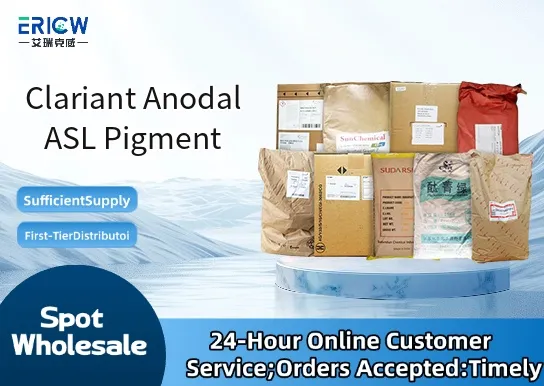
Highly stable anodically deposited organic pigment offering excellent lightfastness and weather resistance.
Engineered for uniform dispersion in aqueous and solvent-based electrolytes used in anodizing processes.
Delivers consistent, reproducible color intensity and hue across aluminum substrates.
Compliant with major industrial environmental standards including REACH and RoHS.
Enables low-temperature, energy-efficient coloring without compromising coating integrity.
Aerospace-grade aluminum components requiring durable, corrosion-resistant coloration.
Architectural aluminum profiles for façades, windows, and curtain walls.
Consumer electronics housings including smartphones, laptops, and wearables.
Automotive trim parts and interior aluminum accents.
Industrial equipment panels and signage requiring long-term outdoor performance.
| Chemical Type | Organic anodic dye (sulfonated azo derivative) |
| Product Form | Free-flowing granular powder |
| Appearance | Dark blue-black granules |
| Primary Applications | Anodic coloring of aluminum alloys (e.g., 6061, 5052, 7075) |
| Key Features | Non-metallic, chromium-free, anodically stable |
| Benefits | Improved process control, reduced rinse water consumption, enhanced batch-to-batch consistency |
| pH Stability Range | 1.8–2.4 (in standard sulfuric acid anodizing bath) |
| Storage Conditions | Keep dry at 5–30°C; protect from moisture and direct sunlight |
Q1: What is the primary application of Clariant Anodal ASL Pigment?
A: Clariant Anodal ASL Pigment is specifically engineered for use in anodized aluminum coloring applications, where it delivers high lightfastness, excellent thermal stability, and uniform dispersion in electrolytic baths.
Q2: Is Anodal ASL Pigment compatible with standard sulfuric acid anodizing processes?
A: Yes — Anodal ASL Pigment is formulated to be compatible with conventional sulfuric acid-based anodizing electrolytes and performs reliably across typical bath operating conditions, including standard temperature and current density ranges.
Q3: How should Anodal ASL Pigment be dispersed prior to addition into the anodizing bath?
A: For optimal performance, the pigment should be pre-dispersed using high-shear mixing in a suitable carrier liquid (e.g., deionized water or diluted acid), followed by gradual, controlled addition to the circulating electrolyte to ensure homogeneity and avoid agglomeration.
Q4: Does Anodal ASL Pigment require special handling or storage conditions?
A: The pigment should be stored in a cool, dry place, protected from moisture and direct sunlight. It is recommended to keep containers tightly sealed when not in use to maintain dispersibility and prevent caking.
Contact With Us:
E-mail: wangxingqiang@ericwchem.com
Have a Questions? Call Us:
Add:
Building A1, Jiete Industrial Park, Huangpu District, Guangzhou City, Guangdong Province, China