English
 Español
 tiếng việt
 русский
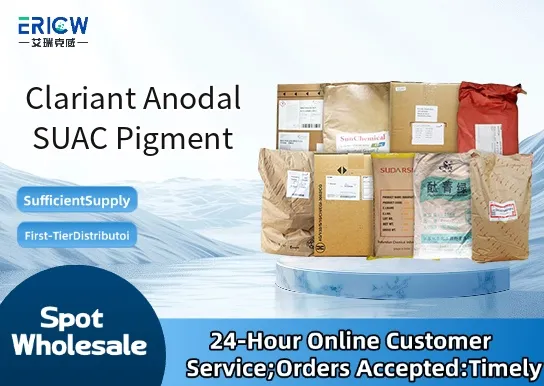
Highly stable anodically stabilized organic pigment dispersion for superior color consistency.
Optimized for electrocoating (e-coat) systems with excellent bath stability and low ionic contamination.
Delivers outstanding hiding power and uniform film build in cathodic and anodic e-coat processes.
Compatible with standard epoxy-amine and phenolic resin-based e-coat formulations.
Reduces sedimentation risk and improves long-term storage stability at ambient temperatures.
Automotive chassis and underbody e-coat primers.
Industrial metal parts requiring corrosion-resistant, baked-on finishes.
Agricultural and construction equipment coatings.
Electrical enclosures and metal housings for durable matte or semi-gloss appearance.
General-purpose anodic electrocoating systems for ferrous and non-ferrous substrates.
| Chemical Type | Anodically stabilized organic pigment dispersion |
| Product Form | Aqueous liquid dispersion |
| Appearance | Uniform dark brown to black viscous liquid (color-dependent on batch) |
| Primary Applications | Anodic electrocoating (e-coat) primers |
| Key Features | Bath stability, low conductivity, high pigment loading efficiency |
| Benefits | Reduced filtration frequency, improved film uniformity, enhanced corrosion protection |
| pH Range | 7.5 – 8.5 (as supplied) |
| Storage Temperature | 5 – 30 °C; protect from freezing |
Q1: What is the primary function of Clariant Anodal SUAC Pigment in electrochemical applications?
A: Clariant Anodal SUAC Pigment is a specialized anodizing pigment designed to provide stable, lightfast coloration during aluminum anodizing processes. It functions as a non-metallic, organic-based colorant that integrates into the porous anodic oxide layer, enabling durable, uniform hues without compromising corrosion resistance or coating integrity.
Q2: Is Anodal SUAC compatible with standard sulfuric acid anodizing baths?
A: Yes — Anodal SUAC Pigment is formulated for compatibility with conventional sulfuric acid anodizing electrolytes. It remains stable under typical process conditions (e.g., 15–20 °C, 12–20 V DC), and does not require bath modification or special pretreatment beyond standard cleaning and etching steps.
Q3: How does Anodal SUAC differ from traditional metal salt dyes used in anodizing?
A: Unlike inorganic metal salt dyes, Anodal SUAC is an organic, non-heavy-metal pigment offering enhanced UV stability and broader color consistency across batch variations. It delivers superior resistance to fading under outdoor exposure and eliminates concerns related to heavy-metal leaching or regulatory restrictions associated with cobalt, nickel, or chromium-based alternatives.
Q4: What is the recommended dosage range for optimal color development?
A: Dosage depends on desired shade intensity, anodizing parameters, and substrate geometry, but Anodal SUAC is typically used at low concentrations — generally ranging from 0.1% to 2% by weight in the dyeing bath. Optimal results are achieved through controlled immersion time and temperature, with fine-tuning performed during process qualification.
Contact With Us:
E-mail: wangxingqiang@ericwchem.com
Have a Questions? Call Us:
Add:
Building A1, Jiete Industrial Park, Huangpu District, Guangzhou City, Guangdong Province, China