English
 Español
 tiếng việt
 русский
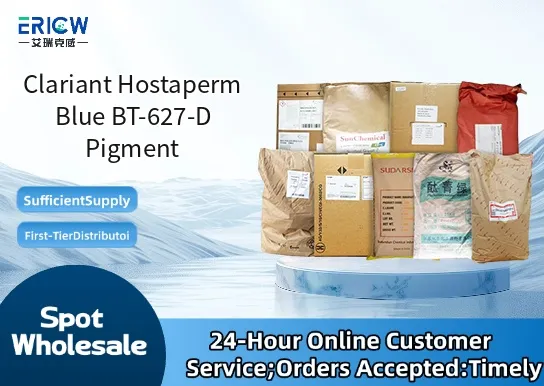
High chroma and excellent bluish-red shade for vibrant, clean blue coloration.
Outstanding thermal stability up to 280 °C, suitable for demanding high-temperature processing.
Excellent lightfastness and weather resistance in polyolefin and engineering plastics.
Good dispersibility in both melt and masterbatch applications without requiring additional dispersants.
Low migration tendency, ensuring color consistency and compliance in food-contact and automotive applications.
Polypropylene (PP) and polyethylene (PE) packaging films and containers.
Automotive interior components including dashboards, trims, and air vents.
Household appliances such as washing machine drums, refrigerator liners, and vacuum cleaner housings.
Engineering plastics like ABS, PS, and PC for consumer electronics and durable goods.
Masterbatch formulations for extrusion, injection molding, and blow molding processes.
| Chemical Type | Quinacridone derivative |
| Product Form | Free-flowing powder |
| Appearance | Blue-violet crystalline powder |
| Primary Applications | Polyolefins, engineering plastics, masterbatches |
| Key Features | High thermal stability, low migration, excellent dispersion |
| Benefits | Consistent color performance, process robustness, regulatory compliance |
| Regulatory Status | Compliant with EU REACH; non-food contact grade unless specified |
| Storage Conditions | Store in cool, dry place below 30 °C; protect from moisture and direct sunlight |
Q1: What is the primary chemical class and pigment type of Hostaperm Blue BT-627-D?
A: Hostaperm Blue BT-627-D is a high-performance perylene-based organic pigment, classified under the Pigment Blue 29 (PB29) series. It exhibits excellent crystallinity and molecular stability, contributing to its strong tinting strength and thermal robustness.
Q2: In which polymer systems is this pigment typically processed, and what are key processing considerations?
A: It is widely used in engineering thermoplastics such as polyamide (PA6, PA66), polybutylene terephthalate (PBT), and polyphenylene sulfide (PPS). Due to its high thermal stability, it withstands melt processing temperatures up to approximately 300 °C. Good dispersion—achieved via high-shear compounding or masterbatch dilution—is essential to maximize color development and avoid agglomeration.
Q3: How does Hostaperm Blue BT-627-D perform regarding lightfastness and weather resistance?
A: This pigment delivers outstanding lightfastness (typically rated ≥7–8 on the ISO 105-B02 scale) and excellent resistance to atmospheric conditions, including UV exposure and humidity. Its performance remains consistent in both indoor and demanding outdoor applications when properly formulated and dispersed.
Q4: Is Hostaperm Blue BT-627-D suitable for food-contact or regulatory-sensitive applications?
A: While not specifically certified for direct food contact, Hostaperm Blue BT-627-D is manufactured under Clariant’s strict quality management system and complies with general industry requirements for non-food-contact plastic articles. Regulatory suitability depends on final formulation, migration behavior, and applicable regional frameworks—consult Clariant’s regulatory documentation and conduct application-specific compliance testing.
Q5: What is the typical dosage range for optimal coloration in engineering plastics?
A: Dosage varies depending on the desired shade depth, polymer matrix, and processing method, but it is generally used at low concentrations—typically ranging from 0.1% to 2% by weight in the final compound. For most standard blue shades in polyamide or PBT, effective loading falls within the lower half of this range.
Contact With Us:
E-mail: wangxingqiang@ericwchem.com
Have a Questions? Call Us:
Add:
Building A1, Jiete Industrial Park, Huangpu District, Guangzhou City, Guangdong Province, China