English
 Español
 tiếng việt
 русский
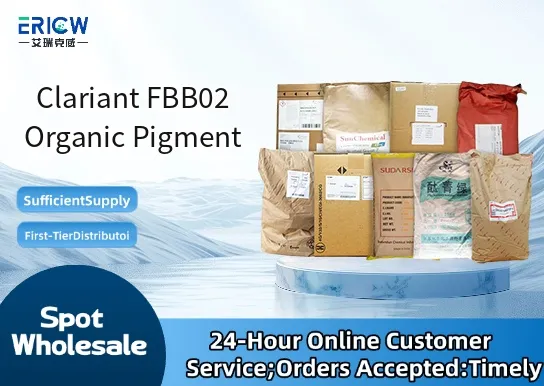
High chroma and excellent color strength for vibrant, consistent red shades.
Outstanding thermal stability suitable for high-temperature processing up to 280 °C.
Good lightfastness and weather resistance in demanding outdoor applications.
Excellent dispersibility in both polar and non-polar polymer matrices.
Low volatility and minimal plate-out tendency during extrusion and injection molding.
Polyolefin masterbatches (PP, PE) for automotive interior components.
Engineering plastics including ABS, PS, and PC for consumer electronics housings.
Food-contact-compliant packaging films requiring FDA-relevant migration performance.
Coatings for industrial appliances and architectural metal finishes.
Textile printing pastes for polyester and acetate fibers.
| Chemical Type | Quinacridone derivative |
| Product Form | Free-flowing powder |
| Appearance | Red-violet fine powder |
| Primary Applications | Plastics, coatings, and textile printing |
| Key Features | Thermally stable, low migration, high tinctorial strength |
| Benefits | Consistent batch-to-batch color, reduced formulation complexity |
| Regulatory Compliance | EU REACH registered; compliant with ISO 8124-3 for toys |
| Storage Conditions | Store in cool, dry place below 30 °C; protect from moisture |
Q1: What is the primary chemical class and typical hue profile of Clariant FBB02?
A: Clariant FBB02 is a high-performance benzimidazolone-based organic pigment, delivering a clean, bluish red shade with excellent chroma and strong tinting strength. Its molecular structure provides inherent stability across key performance parameters.
Q2: Is FBB02 suitable for use in food-contact plastics?
A: FBB02 is designed for demanding industrial applications and may be considered for certain food-contact plastic systems where regulatory compliance has been confirmed by the end-user’s qualified safety assessment. It is not pre-approved for all food-contact uses — final suitability depends on the specific polymer matrix, processing conditions, and applicable regional regulations.
Q3: How does FBB02 perform under outdoor exposure and thermal processing?
A: FBB02 exhibits very good lightfastness and weather resistance in polyolefins and engineering thermoplastics, along with high thermal stability—typically supporting processing temperatures up to 280–300 °C without significant degradation or hue shift, depending on residence time and formulation environment.
Q4: What dispersion characteristics can be expected during masterbatch production?
A: FBB02 demonstrates excellent dispersibility in standard polyolefin and styrenic carriers using conventional compounding equipment. It typically achieves high color development and uniformity at low concentrations, with dosage depending on formulation requirements but generally ranging from 0.1% to 2% by weight in masterbatches.
Contact With Us:
E-mail: wangxingqiang@ericwchem.com
Have a Questions? Call Us:
Add:
Building A1, Jiete Industrial Park, Huangpu District, Guangzhou City, Guangdong Province, China