English
 Español
 tiếng việt
 русский
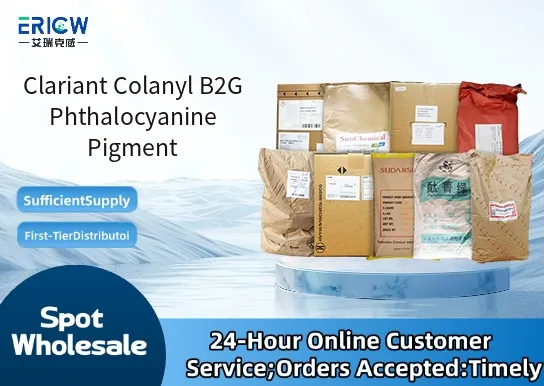
High chroma and excellent bluish-green shade with outstanding color strength.
Superior lightfastness and weather resistance, meeting demanding outdoor application requirements.
Excellent thermal stability up to 200 °C, suitable for high-temperature processing such as powder coating extrusion.
Good dispersibility in organic media including acrylics, polyesters, and PVC plastisols.
Low heavy metal content, compliant with global regulatory frameworks including EU REACH and US CPSIA.
Automotive coatings (basecoats and clearcoat-tinted systems).
Industrial coil and can coatings requiring long-term durability.
Powder coatings for architectural aluminum and metal furniture.
Plastic coloration including engineering plastics (e.g., ABS, polycarbonate) and general-purpose polymers.
High-performance inks for packaging gravure and flexographic printing.
| Chemical Type | Copper phthalocyanine derivative (chlorinated) |
| Product Form | Free-flowing fine powder |
| Appearance | Intense bluish-green crystalline pigment |
| Primary Applications | Coatings, plastics, inks |
| Key Features | High tinting strength, excellent dispersion stability |
| Benefits | Reduced dosage requirement, consistent batch-to-batch performance |
| Regulatory Compliance | REACH registered; non-GMO;不含24种SVHC高关注物质 |
| Storage Conditions | Store in cool, dry place below 30 °C; protect from moisture and direct sunlight |
Q1: What are the key performance advantages of Colanyl B2G compared to standard copper phthalocyanine pigments?
A: Colanyl B2G offers enhanced batch-to-batch consistency, improved dispersibility in polar and non-polar media, and superior resistance to flocculation in demanding liquid systems—particularly beneficial in high-solids coatings and water-based inks where pigment stability is critical.
Q2: Is Colanyl B2G suitable for use in food-contact coatings or inks?
A: Colanyl B2G is designed for industrial and decorative applications. While it complies with general good manufacturing practices for pigments, it is not pre-qualified for direct food-contact applications under major regulatory frameworks—formulators must conduct full system-level compliance testing per intended end-use and regional requirements.
Q3: How should Colanyl B2G be dispersed for optimal color development and rheology control?
A: For best results, pre-wet the pigment with compatible solvents or resins before high-shear dispersion. It responds well to bead milling and high-speed dissolvers, especially when stabilized with appropriate polymeric or surfactant-based dispersants tailored to the vehicle polarity.
Q4: Can Colanyl B2G be used in UV-curable formulations?
A: Yes—Colanyl B2G demonstrates good compatibility with common acrylate monomers and oligomers, and shows minimal interference with photoinitiator activity under typical UV exposure conditions. However, formulation-specific screening is recommended to confirm cure speed, gloss retention, and long-term photostability.
Contact With Us:
E-mail: wangxingqiang@ericwchem.com
Have a Questions? Call Us:
Add:
Building A1, Jiete Industrial Park, Huangpu District, Guangzhou City, Guangdong Province, China