English
 Español
 tiếng việt
 русский
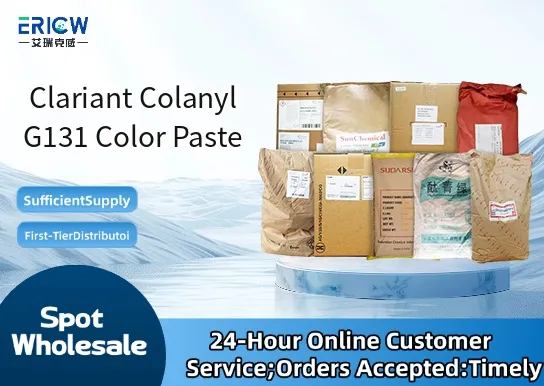
Highly concentrated pigment dispersion for efficient coloration with minimal dosage.
Excellent compatibility with polyolefin (PP, PE) and engineering thermoplastics.
Good thermal stability up to 280 °C, suitable for high-temperature processing.
Low migration and blooming resistance, ensuring long-term color integrity in end products.
Free of heavy metals and compliant with major global regulatory frameworks including EU REACH and US FDA 21 CFR.
Coloration of polypropylene (PP) fibers for automotive interior trims.
Masterbatch formulation for injection-molded consumer goods housings.
Pigmentation of HDPE containers for food packaging and household products.
Coloring of PP nonwovens used in hygiene and medical applications.
Compounding for durable outdoor applications requiring UV-resistant pigments.
| Chemical Type | Organic pigment-based color paste |
| Product Form | Paste (liquid dispersion) |
| Appearance | Homogeneous viscous paste, free of grit or sediment |
| Primary Applications | Polyolefins (PP, PE), engineering plastics |
| Key Features | High concentration, low volatility, excellent dispersion stability |
| Benefits | Consistent batch-to-batch color accuracy, reduced dust generation during handling |
| Storage Conditions | Store at 15–25 °C; protect from freezing and direct sunlight |
| Shelf Life | 12 months from date of manufacture under recommended conditions |
Q1: What is the primary application field for Colanyl G131 Color Paste?
A: Colanyl G131 is specifically developed for coloring polyolefin-based compounds, especially in applications requiring good thermal stability and dispersion performance during compounding and injection molding—such as automotive interior parts, consumer goods, and technical components.
Q2: Is Colanyl G131 suitable for food-contact or medical-grade polyolefins?
A: Colanyl G131 is formulated without intentionally added heavy metals or restricted azo dyes, and it is commonly used in non-food-contact industrial applications. For food-contact or medical uses, final regulatory compliance must be verified by the compounder through full system testing and documentation, as suitability depends on the complete formulation and processing conditions.
Q3: How should Colanyl G131 be incorporated into polyolefin compounds?
A: It is typically added directly to the polymer melt during extrusion compounding or injected via gravimetric or volumetric dosing systems. Good dispersion is achieved under standard polyolefin processing conditions; pre-mixing with a carrier resin is optional but not required for most applications.
Q4: What are the key handling and storage recommendations?
A: Store in original sealed containers at temperatures between 5 °C and 30 °C, away from direct sunlight and moisture. Avoid freezing. Once opened, minimize exposure to air to prevent skin formation; reseal tightly after each use.
Contact With Us:
E-mail: wangxingqiang@ericwchem.com
Have a Questions? Call Us:
Add:
Building A1, Jiete Industrial Park, Huangpu District, Guangzhou City, Guangdong Province, China