English
 Español
 tiếng việt
 русский
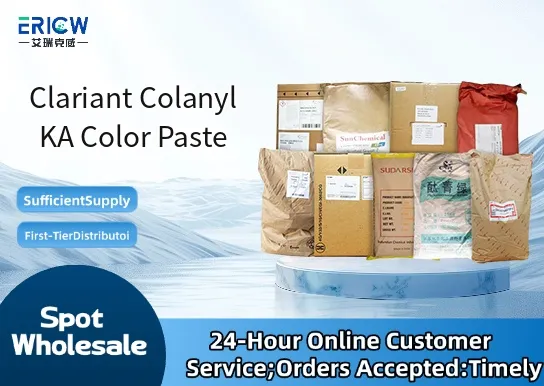
High chroma and excellent color strength for precise shade reproduction.
Outstanding thermal stability suitable for high-temperature polymer processing.
Good dispersion performance in polyolefins, ABS, PS, and engineering plastics.
Low migration and blooming resistance for long-term color integrity.
Compliant with major global food-contact and toy safety regulations (e.g., EU Plastics Regulation No 10/2011, US FDA 21 CFR).
Coloration of polypropylene (PP) and polyethylene (PE) injection-molded parts.
Automotive interior components requiring lightfastness and heat resistance.
Household appliances and consumer electronics housings.
Food packaging films and containers where regulatory compliance is critical.
Toys and childcare articles meeting stringent migration limits.
| Chemical Type | Organic pigment-based masterbatch |
| Product Form | Viscous paste, semi-solid |
| Appearance | Homogeneous, non-gritty paste with consistent texture |
| Primary Applications | Polyolefins, ABS, PS, and engineering thermoplastics |
| Key Features | Thermally stable, low volatility, regulatory-compliant |
| Benefits | Easy dosing, excellent dispersion, minimal equipment contamination |
| Storage Conditions | Store at 15–25 °C in sealed containers; avoid freezing and direct sunlight |
| Shelf Life | 24 months from date of manufacture under recommended conditions |
Q1: What types of polymers is Colanyl KA Color Paste compatible with?
A: Colanyl KA Color Paste is specifically formulated for use in polyolefins—including polypropylene (PP) and polyethylene (PE)—and demonstrates good compatibility in thermoplastic elastomers (TPEs) and certain engineering plastics. Performance may vary depending on polymer polarity, melt temperature, and processing conditions.
Q2: How should Colanyl KA Color Paste be incorporated into the polymer matrix?
A: It is typically introduced via masterbatch dilution or direct addition during compounding—using twin-screw extrusion or high-shear mixing. Pre-drying is generally not required, but optimal dispersion is achieved when added downstream of polymer melting and before final metering.
Q3: Is Colanyl KA Color Paste suitable for applications requiring regulatory compliance for food contact or toys?
A: Colanyl KA Color Paste is designed for industrial and general-purpose coloring applications. For regulated end-uses such as food-contact plastics or toys, formal regulatory approval must be obtained based on the final formulation, processing conditions, and applicable regional requirements. Clariant provides supporting documentation upon request to aid in compliance assessments.
Q4: What is the typical dosage range for achieving target color intensity?
A: Dosage depends on the base polymer, desired shade depth, and processing method, but it is typically used at low concentrations—generally ranging from 0.1% to 2% by weight relative to the total formulation. Stronger tints may require lower dosages, while pastel or translucent effects often demand careful optimization.
Q5: Does Colanyl KA Color Paste offer thermal stability suitable for high-temperature processing?
A: Yes—the paste is engineered to withstand standard polyolefin processing temperatures, including extrusion and injection molding cycles. It exhibits good resistance to thermal degradation and color shift under typical melt conditions, though extended residence times or excessive shear may affect performance.
Contact With Us:
E-mail: wangxingqiang@ericwchem.com
Have a Questions? Call Us:
Add:
Building A1, Jiete Industrial Park, Huangpu District, Guangzhou City, Guangdong Province, China