English
 Español
 tiếng việt
 русский
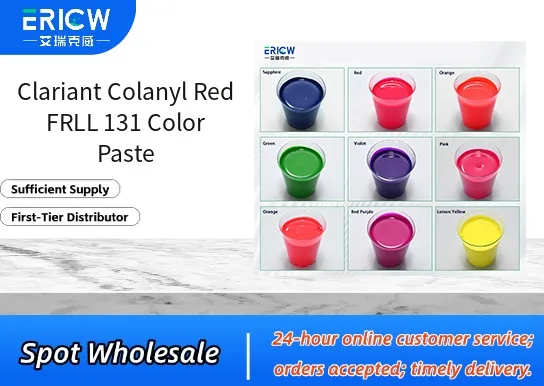
High chroma red shade with excellent color strength and batch-to-batch consistency.
Optimized for low migration and high thermal stability in demanding polymer processing conditions.
Free of heavy metals and compliant with major global regulatory frameworks including EU REACH and US FDA (for indirect food contact applications).
Excellent dispersion performance in polyolefins, engineering thermoplastics, and masterbatch systems.
Low dust formulation ensures improved workplace safety and handling efficiency.
Polypropylene (PP) and polyethylene (PE) packaging films and containers.
Automotive interior components requiring long-term lightfastness and heat resistance.
Household appliances and consumer electronics housings.
Medical device housings where color stability and biocompatibility support are critical.
Technical injection-molded parts for industrial equipment.
| Chemical Type | Organic pigment dispersion (quinacridone-based) |
| Product Form | Concentrated liquid color paste |
| Appearance | Viscous red paste, homogeneous without visible particles |
| Primary Applications | Polyolefins, ABS, PS, and engineering plastics |
| Key Features | Low migration, high thermal stability (>280°C), excellent dispersibility |
| Benefits | Reduced dosing, consistent coloration, simplified processing |
| Regulatory Compliance | EU REACH registered; compliant with ISO 8124-3 for toy safety |
| Storage Conditions | Store at 15–25°C in sealed original container; avoid freezing |
Q1: What is the primary application field for Colanyl Red FRLL 131?
A: Colanyl Red FRLL 131 is specifically developed for coloring polyolefin-based packaging materials, including flexible films and rigid containers used in food, pharmaceutical, and consumer goods applications. Its formulation emphasizes good dispersion, thermal stability during extrusion and thermoforming, and compatibility with common PP and PE processing conditions.
Q2: Is this color paste suitable for food-contact applications?
A: Yes, Colanyl Red FRLL 131 is designed to meet global regulatory expectations for food-contact plastics, including compliance with major frameworks such as FDA 21 CFR and EU Plastics Regulation principles. Final compliance depends on the complete formulation, processing conditions, and intended use — users should verify suitability through appropriate migration testing and regulatory review for their specific application.
Q3: How should Colanyl Red FRLL 131 be incorporated into polyolefin compounds?
A: The paste is typically added directly to the polymer melt during extrusion or injection molding using standard gravimetric or volumetric dosing systems. It disperses readily under typical shear conditions and generally requires no pre-drying. For optimal results, ensure uniform feeding and adequate mixing time—especially when targeting high-color-strength or low-visibility applications.
Q4: What is the recommended dosage range?
A: Dosage depends on the target shade intensity and base polymer opacity, but it is typically used at low concentrations—generally ranging from 0.1% to 2% by weight relative to the polymer. Start with lower levels and adjust incrementally to achieve desired chroma and uniformity while maintaining process stability.
Contact With Us:
E-mail: wangxingqiang@ericwchem.com
Have a Questions? Call Us:
Add:
Building A1, Jiete Industrial Park, Huangpu District, Guangzhou City, Guangdong Province, China