English
 Español
 tiếng việt
 русский
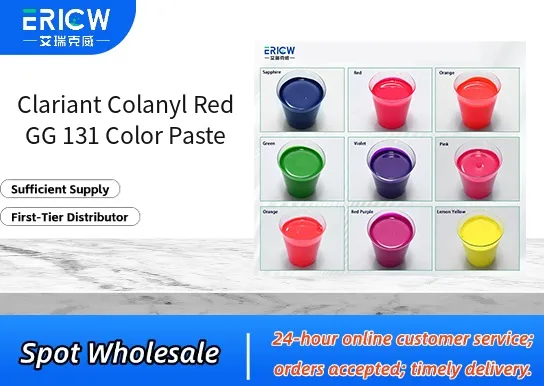
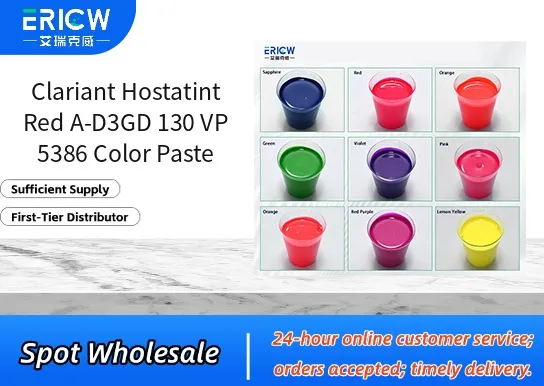
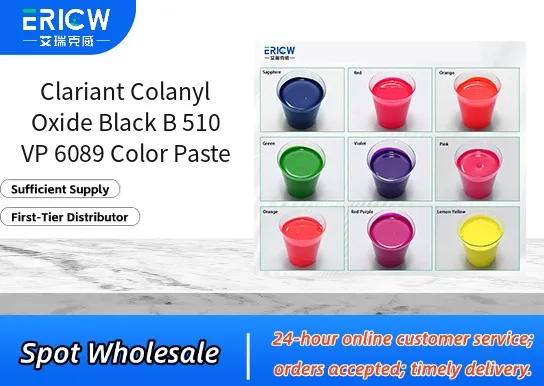
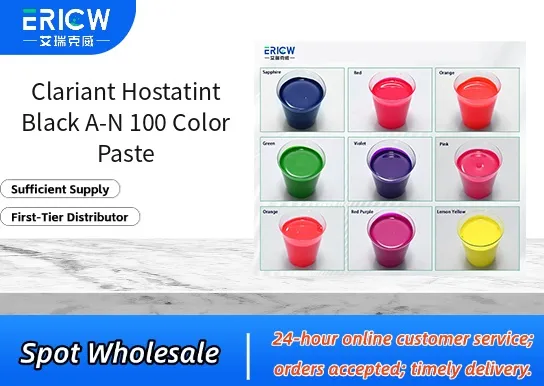
High chroma red shade with excellent color strength and batch-to-batch consistency.
Optimized for compatibility with polyolefin (PP, PE) and engineering thermoplastics including ABS and PS.
Low migration and blooming resistance, ensuring color stability during processing and end-use.
Free of heavy metals and compliant with major global regulatory frameworks including EU REACH and US FDA 21 CFR for indirect food contact applications.
Easy dispersibility in molten polymer matrices, enabling efficient masterbatch production and injection molding.
Automotive interior components (dashboards, trim, air vents).
Household appliances (casings, control panels, small appliance housings).
Packaging for consumer goods (rigid containers, caps, closures).
Medical device housings requiring consistent aesthetics and regulatory compliance.
Consumer electronics enclosures (remote controls, power tools, personal care devices).
| Chemical Type | Organic pigment dispersion in polymeric carrier |
| Product Form | Viscous paste (semi-solid) |
| Appearance | Homogeneous, glossy red paste |
| Primary Applications | Polyolefins, ABS, PS, and other engineering thermoplastics |
| Key Features | High thermal stability, low volatility, excellent dispersion |
| Benefits | Reduced processing defects, improved color reproducibility, enhanced part surface quality |
| Regulatory Status | REACH compliant; FDA 21 CFR §178.3297 suitable for indirect food contact |
| Recommended Loading Range | 1–5 wt% depending on substrate and desired shade depth |
Q1: What is the primary application field for Colanyl Red GG 131 Color Paste?
A: Colanyl Red GG 131 is specifically developed for coloring polyolefin-based compounds, especially in applications requiring good thermal stability and dispersion performance during extrusion and injection molding—such as automotive interior parts, consumer packaging, and technical molded goods.
Q2: Is this color paste suitable for food-contact or pharmaceutical applications?
A: Colanyl Red GG 131 is not pre-qualified for direct food-contact or pharmaceutical use. Its suitability for such regulated applications depends on final formulation validation, including compatibility with base polymer, processing conditions, and compliance with relevant regional regulatory frameworks.
Q3: How should Colanyl Red GG 131 be incorporated into a polymer matrix?
A: It is typically added directly to the base polymer during compounding—via side-stuffer feeder, gravimetric dosing, or premixing—prior to extrusion. Good dispersion is achieved under standard melt-processing conditions; pre-drying is generally not required unless ambient humidity is exceptionally high.
Q4: What are the key handling and storage recommendations?
A: Store in original sealed containers at temperatures between 5 °C and 30 °C, away from direct sunlight and sources of heat. Avoid freezing. Ensure lids are tightly closed after each use to prevent skinning or moisture uptake. Always observe standard industrial hygiene practices when handling.
Q5: What is the typical dosage range for achieving target shade intensity?
A: Dosage depends on the base polymer, desired opacity, and final application requirements, but it is generally used at low concentrations—typically ranging from 0.1% to 2% by weight relative to the polymer matrix.
Contact With Us:
E-mail: wangxingqiang@ericwchem.com
Have a Questions? Call Us:
Add:
Building A1, Jiete Industrial Park, Huangpu District, Guangzhou City, Guangdong Province, China