English
 Español
 tiếng việt
 русский
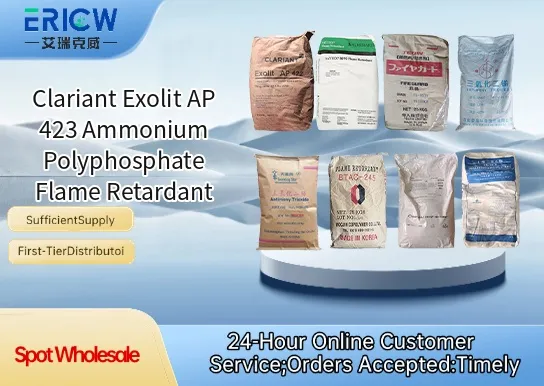
High-purity, halogen-free ammonium polyphosphate (APP) with optimized particle size distribution for excellent dispersion in polymer matrices.
Thermally stable up to 250 °C, enabling compatibility with processing temperatures of engineering thermoplastics such as polypropylene and polyethylene.
Intumescent mode of action: forms a protective char layer upon exposure to heat or flame, significantly reducing heat release and smoke generation.
Low water solubility and high hydrolytic stability, ensuring long-term performance retention in humid or outdoor applications.
REACH-compliant and free of heavy metals, antimony, and halogens—supporting sustainable material design and regulatory compliance.
Polypropylene (PP) compounds for automotive interior parts including dashboards, trim, and seat components.
Low-density and linear low-density polyethylene (LDPE/LLDPE) cables and wire insulation requiring UL 1581 V-0 rating.
Wood-plastic composites (WPC) used in decking, cladding, and outdoor furniture.
Thermoplastic elastomers (TPE) for flexible flame-retarded profiles and seals.
Intumescent coatings and mastics for passive fire protection of structural steel and cables.
| Chemical Type | Ammonium polyphosphate (APP), Type II |
| Product Form | Fine white powder |
| Appearance | White to off-white free-flowing powder |
| Phosphorus Content (as P₂O₅) | ~61–63 wt% |
| Ammonia Content | ~19–21 wt% |
| Particle Size (d₅₀) | Approx. 10–15 µm |
| Thermal Decomposition Onset (TGA, 10 °C/min, air) | ≥ 250 °C |
| pH (10% aqueous suspension) | 6.0–7.5 |
Q1: What is the primary mechanism of flame retardancy for Exolit AP 423?
A: Exolit AP 423 functions primarily through intumescent action—upon heating, it decomposes to generate polyphosphoric acid and ammonia, promoting char formation on the polymer surface and creating a thermally insulating, expanded carbonaceous layer that limits heat and mass transfer.
Q2: In which polymer systems is Exolit AP 423 most commonly used?
A: It is widely employed in engineering thermoplastics such as polypropylene (PP), polyethylene (PE), and polyamide (PA), particularly in applications requiring halogen-free flame retardancy—e.g., automotive interior parts, electrical enclosures, and cable jacketing.
Q3: How does Exolit AP 423 compare to conventional ammonium polyphosphate grades in terms of processing stability?
A: Exolit AP 423 features enhanced thermal stability and reduced water solubility compared to standard APP grades, supporting better melt-processing performance in extrusion and injection molding—especially in moisture-sensitive polymers—without significant degradation or plate-out issues.
Q4: Is Exolit AP 423 suitable for thin-walled or highly filled formulations?
A: Yes—its fine particle size distribution and surface treatment support good dispersion in both thin-section components and highly loaded systems, helping maintain mechanical integrity while delivering consistent flame-retardant performance across varying wall thicknesses and filler loadings.
Contact With Us:
E-mail: wangxingqiang@ericwchem.com
Have a Questions? Call Us:
Add:
Building A1, Jiete Industrial Park, Huangpu District, Guangzhou City, Guangdong Province, China