English
 Español
 tiếng việt
 русский
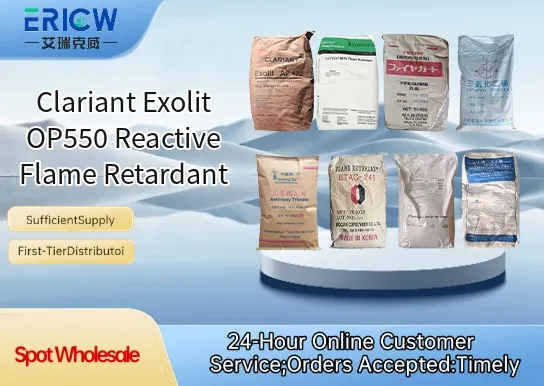
Reactive phosphorus-based flame retardant chemically bonded into polyurethane (PU) and epoxy resin matrices.
Halogen-free formulation supporting compliance with RoHS, REACH, and modern sustainability standards.
Enables excellent thermal stability and char formation during combustion without compromising mechanical properties.
Low volatility and minimal migration, ensuring long-term flame-retardant performance in finished parts.
Compatible with common PU systems including flexible and rigid foams, as well as castable epoxy resins.
Flexible polyurethane foam for automotive seating and interior trim.
Rigid polyurethane insulation panels in construction and cold-chain applications.
Epoxy-based composites for electrical enclosures and printed circuit board laminates.
Coating and adhesive systems requiring UL 94 V-0 or HB rating in industrial equipment.
Transportation interiors meeting FMVSS 302 and DIN 4102 B1 fire safety requirements.
| Chemical Type | Organophosphorus compound (phosphonate ester) |
| Product Form | Liquid |
| Appearance | Colorless to pale yellow, clear liquid |
| Phosphorus Content | Approx. 17.5 wt% |
| Density (20 °C) | 1.22–1.26 g/cm³ |
| Viscosity (25 °C) | 250–400 mPa·s |
| Flash Point (PMCC) | ≥180 °C |
| Primary Applications | Polyurethane foams, epoxy resins, thermoset coatings |
Q1: What makes Exolit OP550 a "reactive" flame retardant?
A: Exolit OP550 contains reactive phosphorus-based functional groups that covalently bond into the polymer backbone during processing—typically in polyurethane or epoxy systems—providing permanent flame retardancy without leaching or migration concerns.
Q2: Which polymer systems is Exolit OP550 compatible with?
A: It is primarily designed for use in thermosetting resins, especially polyurethanes (e.g., flexible and rigid foams) and epoxy formulations. Compatibility should be confirmed via lab-scale trials due to sensitivity to catalysts, curing agents, and formulation pH.
Q3: How does Exolit OP550 affect mechanical properties of the final polymer?
A: When properly incorporated, it generally maintains good balance between flame performance and mechanical integrity—offering minimal impact on tensile strength, elongation, or glass transition temperature compared to additive alternatives, though slight reductions in modulus may occur depending on dosage and matrix.
Q4: Is Exolit OP550 suitable for applications requiring low smoke and low toxicity?
A: Yes—its phosphorus-nitrogen chemistry promotes char formation and suppresses flaming combustion, resulting in significantly reduced smoke density and lower CO/CO₂ ratios during fire exposure compared to halogenated systems.
Contact With Us:
E-mail: wangxingqiang@ericwchem.com
Have a Questions? Call Us:
Add:
Building A1, Jiete Industrial Park, Huangpu District, Guangzhou City, Guangdong Province, China