English
 Español
 tiếng việt
 русский
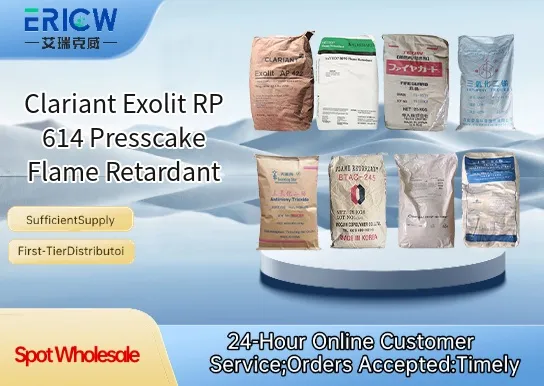
High-efficiency phosphorus-based flame retardant specifically designed for thermoplastic polyurethane (TPU) and polyolefin compounds.
Presscake form enables excellent dispersion and reduced dust generation during handling and compounding.
Halogen-free formulation meets stringent environmental and regulatory requirements including RoHS and REACH compliance.
Enables UL 94 V-0 rating at low to medium loading levels in TPU and PP-based systems.
Good thermal stability up to 250 °C supports standard extrusion and injection molding processing conditions.
Flame-retarded thermoplastic polyurethane (TPU) for cables and wire jacketing.
Fire-safe polypropylene (PP) components in automotive interior parts.
Electrical and electronic housings requiring halogen-free flame protection.
Flexible tubing and profiles used in building and construction applications.
3D printing filaments based on TPU or PP where UL 94 certification is required.
| Chemical Type | Organophosphorus compound (ammonium polyphosphate derivative) |
| Product Form | Presscake (moist granular cake, free-flowing after drying) |
| Appearance | White to off-white granular presscake |
| Primary Applications | TPU, PP, PE, and thermoplastic elastomer (TPE) compounds |
| Key Features | Halogen-free, low smoke, good polymer compatibility |
| Benefits | Reduced processing dust, improved filler dispersion, UL 94 V-0 achievable |
| Storage Conditions | Store in cool, dry place; protect from moisture and direct sunlight |
| Regulatory Compliance | RoHS compliant, REACH registered, no SVHC above threshold |
Q1: What is the primary chemical nature and mode of action of Exolit RP 614 Presscake?
A: Exolit RP 614 Presscake is a phosphorus-based, solid-phase flame retardant formulated as a presscake. It functions primarily through condensed-phase action—promoting char formation and reducing flammable volatiles during thermal decomposition—making it especially effective in thermoplastics and engineering polymers.
Q2: Which polymer systems is Exolit RP 614 Presscake most commonly used in?
A: It is widely applied in polyolefins (e.g., PP and PE), polyesters (including PET and PBT), and certain polyamide blends. Its compatibility and processing stability make it suitable for extrusion and injection molding applications where halogen-free flame retardancy is required.
Q3: How does the presscake form affect handling and formulation compared to dry powder alternatives?
A: The presscake format offers improved dust control and enhanced flowability during feeding, reducing operator exposure and improving dosing consistency. It also provides better dispersion stability in masterbatch production and minimizes segregation risks during compounding versus fine powders.
Q4: Is Exolit RP 614 Presscake compatible with common polymer additives such as stabilizers, fillers, or pigments?
A: Yes—it demonstrates good compatibility with typical thermal stabilizers (e.g., hindered phenols, phosphites), mineral fillers (e.g., talc, calcium carbonate), and organic pigments. However, interaction studies are recommended when combining with strongly acidic or basic additives to ensure optimal performance and color stability.
Contact With Us:
E-mail: wangxingqiang@ericwchem.com
Have a Questions? Call Us:
Add:
Building A1, Jiete Industrial Park, Huangpu District, Guangzhou City, Guangdong Province, China