English
 Español
 tiếng việt
 русский
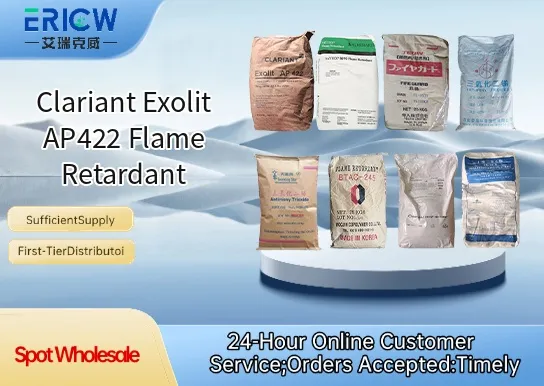
Halogen-free, phosphorus-based intumescent flame retardant for enhanced fire safety compliance.
Excellent thermal stability up to 300 °C, supporting high-temperature polymer processing.
Low smoke and low toxicity emissions during combustion, meeting stringent environmental and safety standards.
Good compatibility with polyolefins (PP, PE) and engineering thermoplastics including PA6 and PBT.
Minimal impact on mechanical properties and surface aesthetics of finished parts.
Wire and cable insulation and jacketing for low-smoke zero-halogen (LSZH) applications.
Electrical and electronic housings requiring UL 94 V-0 rating at thin wall sections.
Automotive interior components such as trim panels, ducts, and connector housings.
Household appliance casings and power tool enclosures demanding flame resistance and processability.
3D printing filaments (e.g., PP/PA-based) where flame retardancy and print reliability are critical.
| Chemical Type | Phosphorus-based intumescent system |
| Product Form | Free-flowing white granules |
| Appearance | White to off-white granular solid |
| Primary Applications | Polyolefins (PP, PE), polyamides (PA6, PA66), PBT |
| Key Features | Halogen-free, RoHS-compliant, REACH registered |
| Benefits | Enables UL 94 V-0 (1.6 mm), low smoke density (ASTM E662), no corrosion during combustion |
| Density | Approx. 1.7 g/cm³ |
| Moisture Content | ≤ 0.5% (w/w) |
Q1: What is the primary chemical nature of Exolit AP422?
A: Exolit AP422 is an organophosphorus-based flame retardant, specifically designed as a highly efficient, halogen-free additive for thermoplastic polymers.
Q2: In which polymer systems is Exolit AP422 most commonly used?
A: It is widely applied in engineering thermoplastics such as polyamide 6 and polyamide 66, as well as in polyesters (e.g., PBT), where it delivers excellent flame retardancy while maintaining good mechanical properties and processability.
Q3: How does Exolit AP422 achieve flame retardancy?
A: It acts primarily through condensed-phase mechanisms—promoting char formation and reducing the release of flammable volatiles—while also contributing some gas-phase activity via phosphorus-containing species that interrupt combustion reactions.
Q4: Is Exolit AP422 suitable for applications requiring regulatory compliance with RoHS or REACH?
A: Yes—Exolit AP422 is halogen-free and fully compliant with RoHS directives; it is also registered under REACH and supplied with full safety and regulatory documentation to support customer compliance efforts.
Q5: What is the typical dosage range required to achieve V-0 rating in PA6?
A: Dosage depends on formulation requirements and processing conditions, but Exolit AP422 is typically used at low concentrations—generally ranging from 0.1% to 2% by weight—to achieve UL 94 V-0 classification in unreinforced and glass-fiber-reinforced polyamide 6.
Contact With Us:
E-mail: wangxingqiang@ericwchem.com
Have a Questions? Call Us:
Add:
Building A1, Jiete Industrial Park, Huangpu District, Guangzhou City, Guangdong Province, China