English
 Español
 tiếng việt
 русский
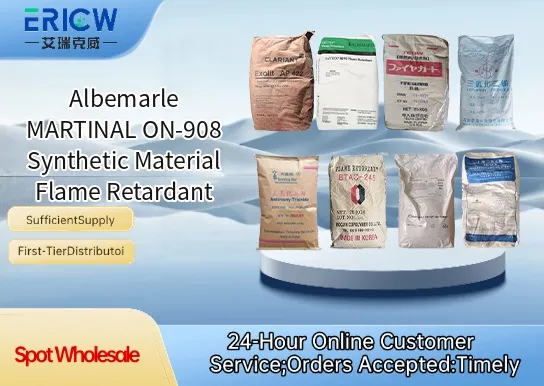
Halogen-free, environmentally sustainable flame retardant based on aluminum hydroxide technology.
Excellent thermal stability with decomposition onset above 180 °C, supporting high-temperature polymer processing.
Low smoke and low toxicity emissions during combustion, meeting stringent fire safety and regulatory requirements (e.g., UL 94 V-0, EN 45545).
High active Al(OH)₃ content ensures efficient flame inhibition and char formation in thermoplastics and elastomers.
Surface-treated grade for enhanced dispersion and interfacial adhesion in non-polar polymer matrices.
Flame-retardant polyolefins (PP, PE) for wire & cable insulation and jacketing.
Engineering thermoplastics including polyamide (PA6, PA66) used in automotive under-hood components.
Thermoplastic elastomers (TPEs) for flexible consumer electronics housings and medical device enclosures.
Rubber compounds in low-smoke zero-halogen (LSZH) cable sheaths and rail transit interior materials.
Non-woven composites and foams for building insulation and transportation seating applications.
| Chemical Type | Surface-modified aluminum hydroxide (Al(OH)₃) |
| Product Form | Free-flowing white powder |
| Appearance | White, odorless, fine particulate solid |
| Primary Applications | Halogen-free flame retardancy in polyolefins, nylons, TPEs, and rubber |
| Key Features | Low smoke, low toxicity, high thermal stability, good dispersion |
| Benefits | Regulatory compliance (RoHS, REACH), improved mechanical retention vs. untreated fillers |
| pH (10% aqueous slurry) | 7.0 – 8.5 |
| Moisture Content (wt%, max) | 0.5% |
Q1: What types of polymers is MARTINAL ON-908 typically compatible with?
A: MARTINAL ON-908 is designed for use in engineering thermoplastics such as polyamide (PA6, PA66), polybutylene terephthalate (PBT), and polycarbonate (PC) blends, where halogen-free flame retardancy is required without compromising mechanical performance or processability.
Q2: How does ON-908 achieve flame retardancy without halogenated chemistry?
A: ON-908 functions primarily through an intumescent mechanism—promoting the formation of a protective, carbon-rich char layer upon exposure to heat—which insulates the underlying polymer and reduces fuel supply to the flame. Its synergistic formulation enhances char stability and limits smoke generation.
Q3: Is ON-908 suitable for applications requiring regulatory compliance with RoHS and REACH?
A: Yes—ON-908 is formulated without restricted substances listed under current RoHS directives and EU REACH Annex XIV/SVHC criteria. It contains no brominated or chlorinated compounds, antimony trioxide, or heavy metals, supporting compliance in electronics, automotive, and consumer goods applications.
Q4: What is the typical dosage range for effective flame retardancy in standard formulations?
A: Effective loading generally ranges from 0.1% to 2% by weight, depending on the base polymer, desired UL rating (e.g., V-0 at 1.6 mm), and presence of other additives. Optimal dosage should be determined through application-specific testing to balance flame performance, mechanical properties, and surface aesthetics.
Q5: Does ON-908 impact processing conditions or thermal stability during extrusion or injection molding?
A: ON-908 exhibits good thermal stability up to typical processing temperatures for engineering plastics (≤300°C). It demonstrates low volatility and minimal plate-out tendency, enabling stable operation in standard compounding and molding equipment without significant adjustments to residence time or temperature profiles.
Contact With Us:
E-mail: wangxingqiang@ericwchem.com
Have a Questions? Call Us:
Add:
Building A1, Jiete Industrial Park, Huangpu District, Guangzhou City, Guangdong Province, China