English
 Español
 tiếng việt
 русский
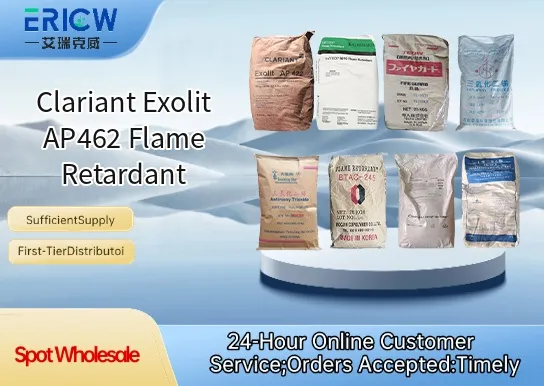
Halogen-free, phosphorus-based intumescent flame retardant for enhanced environmental and regulatory compliance.
Excellent thermal stability up to 300 °C, supporting high-temperature polymer processing such as injection molding and extrusion.
Low water solubility and hydrolytic stability ensure consistent performance in humid environments and during long-term storage.
High phosphorus content (≈22 wt%) delivers efficient char formation and superior flame inhibition in polyolefin systems.
Good dispersion and compatibility with polypropylene (PP), polyethylene (PE), and thermoplastic elastomers (TPEs).
Flame-retarded polypropylene for automotive interior components (e.g., dashboards, door panels).
Wire and cable jacketing compounds requiring UL 94 V-0 rating at thin-wall thicknesses.
Electrical enclosures and housings in consumer electronics and industrial equipment.
Building and construction materials including insulation sheathing and ducting profiles.
| Chemical Type | Intumescent, nitrogen-phosphorus synergistic system |
| Product Form | Free-flowing white granules |
| Appearance | Off-white to light beige granules |
| Primary Applications | Polyolefins (PP, PE), TPEs, and engineering thermoplastics |
| Key Features | Halogen-free, low smoke, low toxicity, RoHS and REACH compliant |
| Benefits | Enables UL 94 V-0 at ≥1.6 mm in PP; no corrosion of metal contacts or wiring |
| Density (23 °C) | ~1.35 g/cm³ |
| Moisture Content (max) | 0.3 wt% (as delivered) |
Q1: What is the primary chemical nature and mechanism of action of Exolit AP462?
A: Exolit AP462 is an organophosphorus-based flame retardant designed for intumescent action in thermoplastics. It functions primarily in the condensed phase by promoting char formation and reducing flammable volatiles during thermal decomposition.
Q2: Which polymer systems is Exolit AP462 most commonly used in?
A: It is widely compatible with polyolefins—especially PP and HDPE—as well as certain engineering thermoplastics such as polyamide 6 and polybutylene terephthalate (PBT), where halogen-free flame retardancy is required.
Q3: How is Exolit AP462 typically incorporated into polymer formulations?
A: It is generally introduced via masterbatch or direct compounding using standard twin-screw extrusion equipment. Good dispersion is achieved under typical melt processing conditions, and it exhibits favorable thermal stability up to processing temperatures common for polyolefins and nylons.
Q4: Does Exolit AP462 impact the mechanical properties of the final compound?
A: When properly formulated and dispersed, it delivers balanced performance—maintaining acceptable tensile strength and impact resistance in many applications. Optimization of filler loading and synergist selection (e.g., with melamine derivatives or charring agents) helps preserve mechanical integrity.
Q5: Is Exolit AP462 suitable for applications requiring regulatory compliance for food contact or low smoke emission?
A: While not specifically designed for food-contact applications, it contributes to reduced smoke density and toxic gas evolution compared to halogenated alternatives. Regulatory suitability must be evaluated case-by-case based on end-use requirements and applicable regional frameworks.
Contact With Us:
E-mail: wangxingqiang@ericwchem.com
Have a Questions? Call Us:
Add:
Building A1, Jiete Industrial Park, Huangpu District, Guangzhou City, Guangdong Province, China