English
 Español
 tiếng việt
 русский
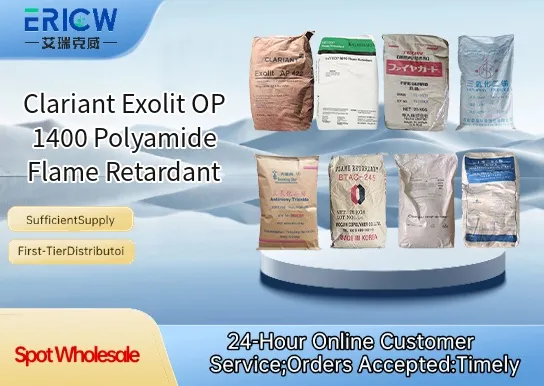
Halogen-free, phosphorus-based flame retardant specifically engineered for polyamide 6 and polyamide 66.
Enables excellent flame retardancy achieving UL 94 V-0 rating at low loading levels (typically 10–15 wt%).
Maintains high mechanical performance and thermal stability of the polymer matrix after compounding.
Low volatility and minimal plate-out during processing, supporting stable extrusion and injection molding.
Compliant with major regulatory frameworks including RoHS, REACH, and non-regulated for SVHC under current listings.
Electrical and electronic components requiring UL 94 V-0 rated polyamide parts.
Automotive under-hood connectors, sensor housings, and ignition system components.
Industrial automation housings and power distribution modules.
Consumer appliance casings and internal structural parts exposed to elevated temperatures.
Railway interior components meeting fire safety standards such as EN 45545-2.
| Chemical Type | Organophosphorus compound |
| Product Form | Free-flowing white granules |
| Appearance | Off-white to light beige granules |
| Primary Applications | Polyamide 6 and polyamide 66 compounds |
| Key Features | Halogen-free, UL 94 V-0 capable, low-migration |
| Benefits | Retained mechanical properties, good processability, low smoke density |
| Density (23 °C) | Approx. 1.4 g/cm³ |
| Thermal Decomposition Onset (TGA, N₂) | ≥ 280 °C |
Q1: What is the primary application domain for Exolit OP 1400?
A: Exolit OP 1400 is specifically engineered for flame retardancy in polyamide-based engineering thermoplastics, especially PA6 and PA66, used in demanding applications such as automotive under-the-hood components, electrical connectors, and industrial housings where UL 94 V-0 or V-2 ratings are required.
Q2: How does Exolit OP 1400 differ from conventional halogenated flame retardants?
A: Exolit OP 1400 is a non-halogenated, phosphorus-based flame retardant offering improved environmental and processing safety profiles—avoiding corrosive decomposition gases, reduced smoke toxicity, and better compatibility with polyamide matrices compared to brominated or chlorinated alternatives.
Q3: Is Exolit OP 1400 suitable for glass-fiber reinforced polyamides?
A: Yes, Exolit OP 1400 demonstrates good compatibility and dispersion stability in both unfilled and glass-fiber reinforced PA6/PA66 compounds, maintaining mechanical integrity and flame performance without significant degradation of tensile strength or impact resistance.
Q4: What processing conditions should be considered during compounding?
A: Exolit OP 1400 is thermally stable up to typical polyamide processing temperatures. It is recommended to avoid prolonged residence time above 300 °C and to ensure adequate drying of both the polyamide resin and the additive prior to melt processing to prevent hydrolytic effects and optimize dispersion.
Q5: How is dosage typically determined for achieving target flame performance?
A: Dosage depends on formulation requirements—including base polymer type, filler content, and desired flame rating—but Exolit OP 1400 is generally effective at low concentrations, typically ranging from 0.1% to 2% by weight in the final compound, with optimization guided by small-scale trials and UL 94 testing.
Contact With Us:
E-mail: wangxingqiang@ericwchem.com
Have a Questions? Call Us:
Add:
Building A1, Jiete Industrial Park, Huangpu District, Guangzhou City, Guangdong Province, China