English
 Español
 tiếng việt
 русский
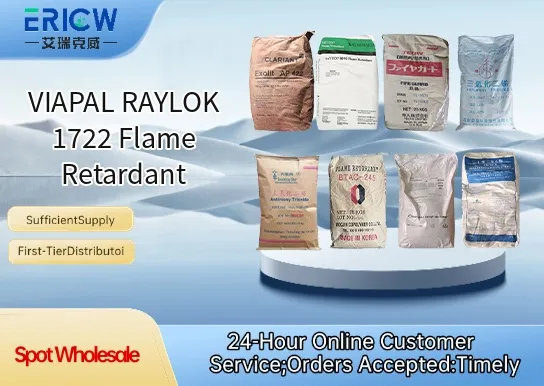
Halogen-free phosphorus-based chemistry for low smoke and reduced toxic gas emission during combustion.
Excellent thermal stability, maintaining performance up to 300 °C in polymer processing conditions.
Good compatibility with polyolefins, engineering thermoplastics, and thermoplastic elastomers.
Non-migrating formulation ensures long-term flame-retardant efficacy and surface integrity.
RoHS and REACH compliant, supporting sustainable material design and regulatory readiness.
Wire and cable insulation and jacketing for low-smoke zero-halogen (LSZH) applications.
Flame-retarded polypropylene (PP) and polyethylene (PE) compounds for automotive interior components.
Electrical enclosures and housings requiring UL 94 V-0 rating at 1.6 mm thickness.
Thermoplastic elastomer (TPE) profiles used in public transport interiors and building fixtures.
3D printing filaments where fire safety and printability must be balanced.
| Chemical Type | Organophosphorus compound |
| Product Form | Free-flowing white granules |
| Appearance | Off-white to pale yellow granular solid |
| Primary Applications | Halogen-free flame retardancy in thermoplastics |
| Key Features | Low smoke, non-corrosive, high char-forming efficiency |
| Benefits | Enables UL 94 V-0/V-1 ratings without antimony trioxide synergy |
| Density (g/cm³) | 1.45–1.55 |
| Decomposition Onset Temperature (°C) | ≥280 (by TGA, 10 °C/min, N₂) |
Q1: What is the primary chemical nature of VIAPAL RAYLOK 1722?
A: VIAPAL RAYLOK 1722 is an organophosphorus-based flame retardant, designed to provide effective gas-phase and condensed-phase flame inhibition in thermoplastic polymers without halogen content.
Q2: Which polymer systems is VIAPAL RAYLOK 1722 typically compatible with?
A: It demonstrates good compatibility and thermal stability in engineering thermoplastics such as polyamide (PA6, PA66), polybutylene terephthalate (PBT), and polycarbonate blends—particularly where halogen-free flame retardancy and low smoke generation are required.
Q3: How is VIAPAL RAYLOK 1722 typically incorporated into formulations?
A: It is generally introduced via melt compounding during extrusion, offering good dispersion and minimal impact on mechanical properties when processed within recommended temperature windows. Dosage depends on formulation requirements but typically ranges from 0.1% to 2% by weight for UL94 V-0 performance in suitable base resins.
Q4: Does VIAPAL RAYLOK 1722 affect the processing or end-use properties of the polymer?
A: When properly formulated, it maintains good flow characteristics and exhibits limited effect on tensile strength or impact resistance. However, optimal performance requires careful balancing with stabilizers and other additives to mitigate potential hydrolytic sensitivity in humid environments.
Contact With Us:
E-mail: wangxingqiang@ericwchem.com
Have a Questions? Call Us:
Add:
Building A1, Jiete Industrial Park, Huangpu District, Guangzhou City, Guangdong Province, China