English
 Español
 tiếng việt
 русский
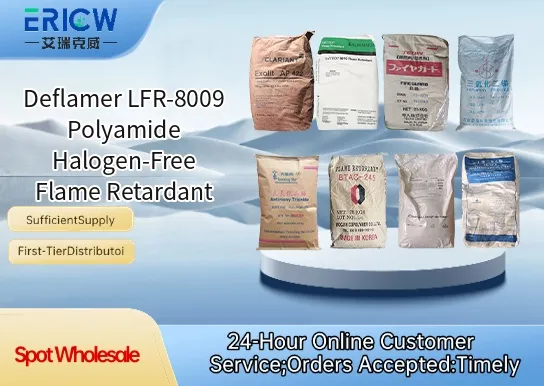
Halogen-free formulation compliant with RoHS, REACH, and UL 94 V-0 requirements for polyamide systems.
Excellent thermal stability up to 320°C, enabling safe processing during injection molding and extrusion of PA6 and PA66.
Low smoke density and negligible corrosive gas emission during combustion, enhancing fire safety in enclosed environments.
Good compatibility and dispersion in polyamide matrices without compromising mechanical properties such as tensile strength and impact resistance.
Non-migrating design ensures long-term flame-retardant performance and surface integrity over time.
Electrical and electronic components: connectors, circuit breakers, and housing parts requiring UL 94 V-0 rating.
Automotive under-hood components: sensor housings, fuse boxes, and ignition system parts exposed to elevated temperatures.
Industrial machinery parts: gears, bushings, and structural elements where flame retardancy and mechanical robustness are critical.
Railway interior components: panels, brackets, and cable management systems meeting EN 45545-2 fire safety standards.
Consumer appliance housings: power tools, kitchen appliances, and HVAC components demanding halogen-free fire protection.
| Chemical Type | Phosphorus-nitrogen synergistic polymeric flame retardant |
| Product Form | Free-flowing white granules |
| Appearance | Off-white to light beige granules, uniform particle size |
| Recommended Loading Level | 12–18 wt% in PA6/PA66 (varies by grade and application) |
| Density | 1.45–1.55 g/cm³ |
| Melting Range | 270–290°C |
| Moisture Content (max) | 0.15 wt% |
| Storage Conditions | Store in dry, cool, well-ventilated area; protect from humidity and direct sunlight |
Q1: What types of polyamide resins is Deflamer LFR-8009 compatible with?
A: Deflamer LFR-8009 is specifically engineered for use in aliphatic polyamides, including PA6 and PA66, and demonstrates good compatibility in both virgin and glass-fiber-reinforced grades. It is not recommended for aromatic or semi-crystalline high-temperature polyamides without prior compatibility testing.
Q2: How does LFR-8009 achieve flame retardancy without halogenated compounds?
A: LFR-8009 operates through a synergistic combination of condensed-phase action—promoting char formation on the polymer surface—and limited gas-phase activity. Its polyamide-specific molecular design enhances dispersion and interfacial interaction, improving thermal stability and reducing heat release during combustion.
Q3: Does LFR-8009 affect the mechanical properties of polyamide compounds?
A: When properly compounded, LFR-8009 typically preserves key mechanical performance—including tensile strength and impact resistance—especially in formulations where processing conditions are optimized. Some reduction in elongation at break may occur at higher loadings, but this is generally less pronounced than with many conventional phosphorus-based alternatives.
Q4: What is the recommended processing method for incorporating LFR-8009 into polyamide systems?
A: LFR-8009 is best introduced via masterbatch dilution or direct dry-blend followed by melt compounding using standard twin-screw extrusion. Pre-drying of both the polyamide resin and LFR-8009 is advised to minimize hydrolytic degradation, particularly for moisture-sensitive grades like PA6.
Contact With Us:
E-mail: wangxingqiang@ericwchem.com
Have a Questions? Call Us:
Add:
Building A1, Jiete Industrial Park, Huangpu District, Guangzhou City, Guangdong Province, China