English
 Español
 tiếng việt
 русский
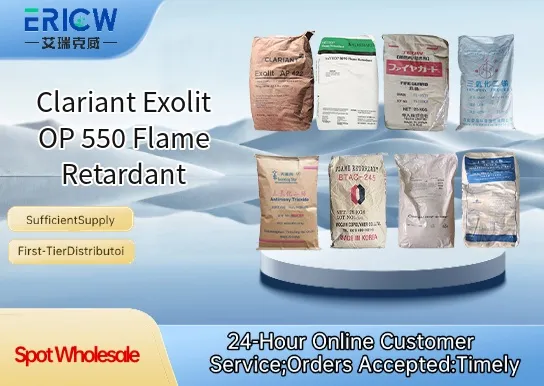
Halogen-free phosphorus-based flame retardant offering excellent fire safety performance.
Designed for efficient dispersion and compatibility in polyolefin compounds, especially PP and PE.
Low smoke and low toxicity during combustion, supporting improved fire safety and environmental compliance.
Good thermal stability up to 300 °C, enabling processing via extrusion and injection molding.
Non-migrating formulation ensures long-term retention of flame-retardant properties in finished parts.
Electrical and electronic housings requiring UL 94 V-0 classification.
Automotive interior components such as trim, dashboards, and air ducts.
Wire and cable jacketing materials for low-smoke, halogen-free applications.
Consumer appliance casings including power tools and kitchen appliances.
Industrial polymer parts where regulatory compliance with RoHS and REACH is mandatory.
| Chemical Type | Organophosphorus compound |
| Product Form | Free-flowing white granules |
| Appearance | Off-white to light beige granules |
| Density (23 °C) | 1.45–1.55 g/cm³ |
| Melting Range | 280–300 °C (DSC, onset) |
| Moisture Content | < 0.5 wt% (as supplied) |
| pH (1% aqueous suspension) | 6.5–7.5 |
| Primary Applications | Polypropylene (PP), polyethylene (PE), and thermoplastic elastomers (TPE) |
Q1: What is the primary chemical nature of Exolit OP 550?
A: Exolit OP 550 is an organophosphorus-based flame retardant, specifically formulated as a highly efficient, halogen-free additive for thermoplastic polymers.
Q2: In which polymer systems is Exolit OP 550 most commonly used?
A: It is widely applied in engineering thermoplastics such as polyamide (PA6 and PA66), polybutylene terephthalate (PBT), and polycarbonate blends—particularly where UL 94 V-0 or V-2 performance is required at thin wall sections.
Q3: How does Exolit OP 550 achieve flame retardancy?
A: It acts primarily through condensed-phase mechanisms—promoting char formation and reducing the release of flammable volatiles—while also contributing some gas-phase radical quenching activity typical of phosphorus-containing compounds.
Q4: Is Exolit OP 550 compatible with common processing additives and stabilizers?
A: Yes, it demonstrates good compatibility with standard polymer stabilizers—including hindered phenols, phosphites, and HALS—as well as typical processing aids, though compatibility should always be verified under actual formulation and processing conditions.
Q5: What is the typical dosage range for achieving effective flame retardancy?
A: Dosage depends on the base polymer, part geometry, and target fire performance, but Exolit OP 550 is generally effective at low concentrations—typically ranging from 0.1% to 2% by weight in optimized formulations.
Contact With Us:
E-mail: wangxingqiang@ericwchem.com
Have a Questions? Call Us:
Add:
Building A1, Jiete Industrial Park, Huangpu District, Guangzhou City, Guangdong Province, China