English
 Español
 tiếng việt
 русский
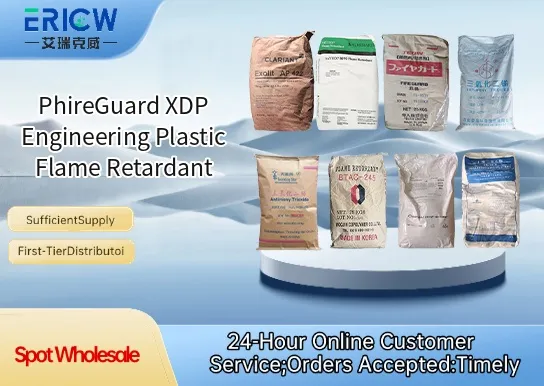
Halogen-free formulation ensuring low smoke density and minimal toxic gas emission during combustion.
Excellent thermal stability, maintaining performance up to 300 °C without significant decomposition.
High compatibility with engineering plastics including polyamide (PA6/PA66), polybutylene terephthalate (PBT), and polycarbonate blends.
UL 94 V-0 rated at 1.5 mm thickness, meeting stringent international fire safety standards.
Minimal impact on mechanical properties—preserves tensile strength, impact resistance, and dimensional stability of host polymers.
Electrical and electronic enclosures requiring flame-retardant compliance (e.g., connectors, circuit breakers, sockets).
Automotive interior components such as dashboard housings, junction boxes, and sensor mounts.
Industrial automation housings for control panels, motor drives, and PLC modules.
Railway rolling stock interiors including seat frames, ceiling panels, and wiring ducts.
IT infrastructure equipment including server racks, power supply units, and network switches.
| Chemical Type | Phosphorus-nitrogen synergistic intumescent system |
| Product Form | Free-flowing white granules |
| Appearance | Off-white to light beige granules, uniform particle size |
| Primary Applications | Flame retardancy for engineering thermoplastics (PA, PBT, PC blends) |
| Key Features | Halogen-free, RoHS-compliant, REACH registered |
| Recommended Loading Range | 12–20 wt% depending on base polymer and required rating |
| Storage Conditions | Store in dry, cool conditions (<25 °C); keep sealed to prevent moisture absorption |
| Processing Method | Standard twin-screw extrusion; compatible with conventional compounding equipment |
Q1: What types of engineering plastics is PhireGuard XDP compatible with?
A: PhireGuard XDP is specifically formulated for use in high-performance thermoplastics including polyamide (PA6, PA66), polybutylene terephthalate (PBT), and polyphenylene ether (PPE) blends. It demonstrates excellent dispersion and thermal stability during standard melt-processing conditions such as injection molding and extrusion.
Q2: How does PhireGuard XDP achieve flame retardancy without halogen-based chemistry?
A: PhireGuard XDP operates via an intumescent mechanism—promoting the formation of a protective, carbon-rich char layer upon exposure to heat or flame. This barrier insulates the underlying polymer, reduces fuel release, and limits oxygen access, enabling effective halogen-free flame retardancy aligned with evolving regulatory and sustainability expectations.
Q3: Does PhireGuard XDP affect mechanical properties or surface appearance of the final part?
A: When properly compounded, PhireGuard XDP maintains good balance between flame performance and key mechanical attributes—including tensile strength, impact resistance, and dimensional stability. It is engineered to minimize blooming and surface haze, supporting consistent aesthetics and post-processing compatibility such as painting or metallization.
Q4: What is the typical dosage range for achieving UL94 V-0 rating?
A: Dosage depends on the base resin, filler content, and target performance level—but PhireGuard XDP is generally effective at low concentrations, typically ranging from 0.1% to 2% by weight in optimized formulations. Final loading should be determined through application-specific testing under relevant fire standards.
Contact With Us:
E-mail: wangxingqiang@ericwchem.com
Have a Questions? Call Us:
Add:
Building A1, Jiete Industrial Park, Huangpu District, Guangzhou City, Guangdong Province, China