English
 Español
 tiếng việt
 русский
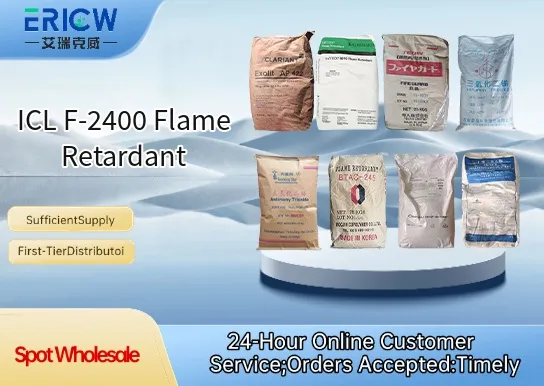
Halogen-free, phosphorus-based flame retardant offering excellent thermal stability up to 300 °C.
Low volatility and minimal migration in polymer matrices, ensuring long-term flame-retardant performance.
Compatible with polyolefins, engineering thermoplastics (e.g., PP, PE, PBT), and thermoplastic elastomers.
Meets stringent UL 94 V-0 rating at low loading levels (typically 15–22 wt% depending on resin).
Non-corrosive to processing equipment and exhibits good hydrolytic stability under standard processing conditions.
Wire and cable jacketing for low-smoke, halogen-free applications in building infrastructure.
Electrical enclosures and connectors requiring UL 94 V-0 compliance and RoHS/REACH conformity.
Automotive interior components including dashboards, trim parts, and under-hood non-structural housings.
Consumer electronics housings where flame safety, colorability, and processability are critical.
3D printing filaments (e.g., flame-retardant PP or ABS blends) for functional prototyping and industrial parts.
| Chemical Type | Organophosphorus compound (phosphinate-based) |
| Product Form | Free-flowing white to off-white granular powder |
| Appearance | Uniform granules, no visible dust or agglomerates |
| Density (23 °C) | 1.45–1.50 g/cm³ |
| Melting Range | 280–295 °C (DSC, 10 °C/min) |
| Moisture Content | ≤ 0.15 wt% (by Karl Fischer titration) |
| pH (1% aqueous suspension) | 6.5–7.5 |
| Key Regulatory Status | REACH registered; RoHS compliant; TSCA listed |
Q1: What is the primary chemical nature of ICL F-2400?
A: ICL F-2400 is a halogen-free, phosphorus-based flame retardant designed for use in thermoplastic polymers. It functions primarily through condensed-phase action, promoting char formation and reducing heat release during combustion.
Q2: In which polymer systems is ICL F-2400 most commonly applied?
A: It is widely used in engineering thermoplastics such as polyamide (PA6 and PA66), polybutylene terephthalate (PBT), and polycarbonate blends—particularly where UL 94 V-0 or V-2 ratings are required without compromising mechanical performance or processability.
Q3: How does ICL F-2400 affect processing and thermal stability during compounding and molding?
A: ICL F-2400 exhibits good thermal stability up to typical melt processing temperatures of engineering plastics. It shows minimal volatility and degradation during extrusion and injection molding, supporting consistent dispersion and stable rheology when properly compounded.
Q4: Is ICL F-2400 compatible with common polymer additives such as UV stabilizers, lubricants, or impact modifiers?
A: Yes, ICL F-2400 generally demonstrates good compatibility with standard additive packages used in engineering plastics. However, synergistic or antagonistic interactions should be evaluated on a case-by-case basis during formulation development, especially with acidic or strongly basic additives.
Q5: What is the typical dosage range for achieving flame-retardant performance in reinforced polyamide compounds?
A: Dosage depends on the specific polymer matrix, filler content, and target flammability rating, but ICL F-2400 is typically used at low concentrations—generally ranging from 0.1% to 2% by weight—to achieve UL 94 V-0 in glass-fiber-reinforced PA6 or PA66 formulations.
Contact With Us:
E-mail: wangxingqiang@ericwchem.com
Have a Questions? Call Us:
Add:
Building A1, Jiete Industrial Park, Huangpu District, Guangzhou City, Guangdong Province, China