English
 Español
 tiếng việt
 русский
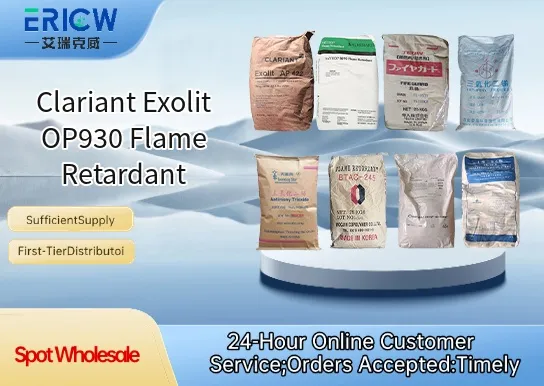
Halogen-free phosphorus-based flame retardant offering excellent fire safety performance.
Designed for high thermal stability, enabling processing at elevated temperatures typical in engineering thermoplastics.
Low smoke and low toxicity during combustion, supporting improved fire safety and regulatory compliance (e.g., UL 94 V-0).
Good compatibility with polyamide 6 (PA6) and polyamide 66 (PA66), minimizing impact on mechanical properties.
Non-migrating formulation ensures long-term performance retention and surface integrity.
Electrical and electronic components requiring UL 94 V-0 rating, such as connectors and housings.
Automotive interior parts including under-hood components and cabin modules.
Industrial machinery housings exposed to elevated ambient temperatures.
Consumer appliance casings where flame retardancy and aesthetic surface quality are critical.
| Chemical Type | Organophosphorus compound |
| Product Form | Powder |
| Appearance | White to off-white free-flowing powder |
| Primary Applications | Polyamide 6 and polyamide 66 compounds |
| Key Features | Halogen-free, non-migrating, thermally stable |
| Benefits | Enables UL 94 V-0 at low loading levels; low smoke generation; RoHS compliant |
| Density (23 °C) | ~1.5 g/cm³ |
| Decomposition Onset Temperature | ≥300 °C (TGA, 10 K/min, air) |
Q1: What is the primary chemical nature and mechanism of action of Exolit OP930?
A: Exolit OP930 is an organophosphorus-based flame retardant designed for polyolefin compounds. It acts primarily in the condensed phase by promoting char formation and reducing flammable volatiles during thermal decomposition, thereby enhancing ignition resistance and slowing flame spread.
Q2: In which polymer systems is Exolit OP930 most commonly used?
A: Exolit OP930 is especially effective in polypropylene (PP) and polyethylene (PE), including both homopolymers and copolymers. It is widely applied in thin-walled injection-molded parts, automotive interior components, and electrical enclosures where halogen-free flame retardancy and good processability are required.
Q3: How does Exolit OP930 perform under processing conditions such as high-shear compounding or repeated extrusion?
A: Exolit OP930 exhibits excellent thermal and hydrolytic stability, enabling robust performance during standard polyolefin compounding and multiple processing cycles. It maintains consistent flame-retardant efficacy and shows minimal degradation or plate-out even at typical melt temperatures up to 240 °C.
Q4: Is Exolit OP930 compatible with common polyolefin additives such as antioxidants, UV stabilizers, and mineral fillers?
A: Yes — Exolit OP930 demonstrates good compatibility with standard phenolic and phosphite antioxidants, hindered amine light stabilizers (HALS), and common mineral fillers like talc and calcium carbonate. Synergistic effects may occur with certain synergists, but formulation optimization is recommended to ensure balanced performance.
Q5: What are key handling and safety considerations during industrial use?
A: As a fine organic powder, Exolit OP930 should be handled in well-ventilated areas to avoid dust inhalation. Use appropriate personal protective equipment (PPE), including respirators rated for fine particulates, gloves, and eye protection. Storage should be in dry, cool conditions away from strong oxidizing agents.
Contact With Us:
E-mail: wangxingqiang@ericwchem.com
Have a Questions? Call Us:
Add:
Building A1, Jiete Industrial Park, Huangpu District, Guangzhou City, Guangdong Province, China