English
 Español
 tiếng việt
 русский
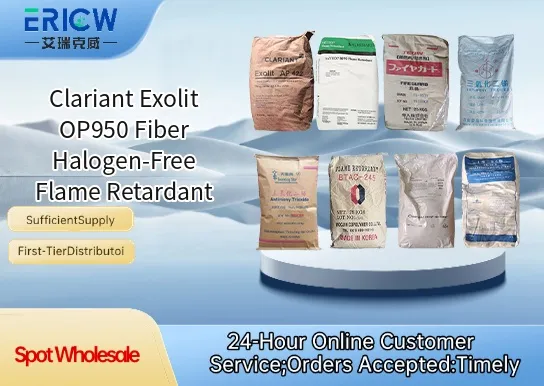
Phosphorus-based intumescent flame retardant specifically engineered for polyolefin fibers and nonwovens.
Halogen-free formulation ensures compliance with RoHS, REACH, and other global environmental and safety regulations.
Excellent thermal stability up to 280 °C, enabling compatibility with high-temperature fiber extrusion processes.
Low migration and superior dispersion in PP and PE matrices, supporting consistent flame performance and mechanical integrity.
Enables UL 94 V-0 and EN 13501-1 B-s1,d0 classifications in thin-gauge fiber applications without compromising spinnability.
Flame-retarded polypropylene (PP) and polyethylene (PE) melt-blown and spunbond nonwovens for protective clothing.
Fire-safe automotive interior textiles, including seat covers, headliners, and insulation mats.
Electrical and electronic cable wrapping tapes requiring low smoke and zero halogen emissions.
Building insulation fibers meeting stringent EU Construction Products Regulation (CPR) requirements.
Geotextiles and technical fabrics used in public infrastructure where fire classification is mandatory.
| Chemical Type | Organophosphorus intumescent system |
| Product Form | Fine free-flowing powder |
| Appearance | White to off-white granular powder |
| Primary Applications | Polyolefin fibers, nonwovens, and technical textiles |
| Key Features | Halogen-free, low smoke, UL 94 V-0 capable, REACH-compliant |
| Recommended Loading Range | 15–25 wt% in PP/PE fiber systems |
| Density (23 °C) | ~1.4 g/cm³ |
| Decomposition Onset Temperature | ≥260 °C (TGA, 10 °C/min, N₂) |
Q1: What is the primary application domain for Exolit OP950 Fiber?
A: Exolit OP950 Fiber is specifically engineered for flame retardancy in thermoplastic fiber applications, including melt-spun fibers used in technical textiles, automotive interior fabrics, and protective workwear where halogen-free solutions are required.
Q2: How does Exolit OP950 Fiber differ from conventional powder-based Exolit OP grades?
A: Unlike standard powder formulations, OP950 Fiber is supplied as free-flowing, micronized fibers designed for improved dispersion and reduced dust generation during handling—enhancing process safety and consistency in fiber spinning and compounding operations.
Q3: Is Exolit OP950 Fiber compatible with common polymeric matrices used in fiber production?
A: Yes—it demonstrates good compatibility with major thermoplastics used in synthetic fiber manufacturing, including polypropylene (PP), polyethylene terephthalate (PET), and polyamide 6 (PA6), supporting stable melt processing without significant degradation or filter clogging.
Q4: What regulatory and sustainability advantages does this halogen-free formulation offer?
A: As a halogen-free solution, Exolit OP950 Fiber supports compliance with evolving environmental and health regulations targeting persistent, bioaccumulative, and toxic substances—making it suitable for markets prioritizing safer end-of-life behavior, recyclability, and lower smoke toxicity.
Contact With Us:
E-mail: wangxingqiang@ericwchem.com
Have a Questions? Call Us:
Add:
Building A1, Jiete Industrial Park, Huangpu District, Guangzhou City, Guangdong Province, China