English
 Español
 tiếng việt
 русский
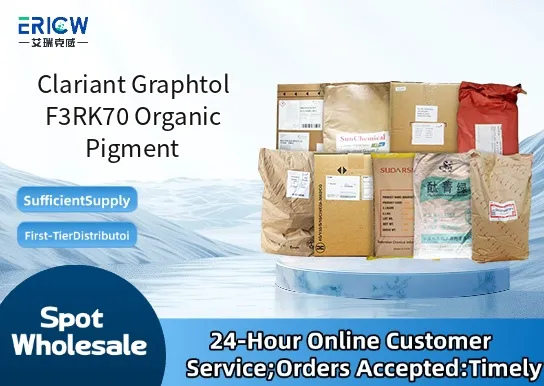
High chroma and excellent color strength in demanding solvent-based systems.
Outstanding thermal stability up to 220 °C, suitable for high-temperature processing.
Good lightfastness and weather resistance in automotive and industrial coatings.
Low volatility and minimal extractables, supporting compliance with stringent VOC and REACH requirements.
Excellent dispersibility in acrylic, polyester, and alkyd resin matrices without excessive milling.
Automotive OEM and refinish coatings.
Industrial coil and can coatings.
High-performance plastic coloration (e.g., ABS, PS, PC).
Specialty inks for packaging and decorative printing.
Powder coatings requiring fine particle size and consistent hue.
| Chemical Type | Quinacridone derivative |
| Product Form | Free-flowing powder |
| Appearance | Reddish violet fine powder |
| Primary Applications | Coatings, plastics, inks |
| Key Features | High transparency, good migration resistance |
| Benefits | Consistent batch-to-batch color reproducibility |
| Recommended Dispersants | Polycarboxylate-based or polymeric dispersants |
| Storage Conditions | Store in cool, dry place below 30 °C; protect from moisture |
Q1: What is the primary chemical class and typical application focus of Graphtol F3RK70?
A: Graphtol F3RK70 is a high-performance quinacridone-based organic pigment, engineered for demanding decorative and functional applications in thermoplastic polymers—particularly where exceptional lightfastness, thermal stability, and clean red-violet hue are required.
Q2: Is Graphtol F3RK70 suitable for use in food-contact or medical-grade polymer compounds?
A: Graphtol F3RK70 is not pre-qualified for direct food-contact or medical applications. Its suitability must be evaluated case-by-case by the compounder, considering regulatory requirements, final formulation composition, processing conditions, and intended end-use compliance pathways.
Q3: How does Graphtol F3RK70 perform under high-temperature processing conditions?
A: This pigment demonstrates excellent thermal stability and is specifically designed for melt-processing in engineering thermoplastics such as polyamide, polyesters, and polycarbonate—typically withstanding continuous processing temperatures up to 280–300 °C without significant hue shift or degradation.
Q4: What dispersion methods are recommended to achieve optimal color development and consistency?
A: For best results, Graphtol F3RK70 should be incorporated using high-shear compounding techniques—such as twin-screw extrusion—with optimized screw design and residence time. Pre-dispersed masterbatches or liquid dispersions may also be used depending on the host system and production scale.
Q5: What is the typical dosage range for Graphtol F3RK70 in polymer coloration?
A: Dosage depends on the desired shade strength, base polymer, and processing method—but it is generally used at low concentrations, typically ranging from 0.1% to 2% by weight in the final compound.
Contact With Us:
E-mail: wangxingqiang@ericwchem.com
Have a Questions? Call Us:
Add:
Building A1, Jiete Industrial Park, Huangpu District, Guangzhou City, Guangdong Province, China