English
 Español
 tiếng việt
 русский
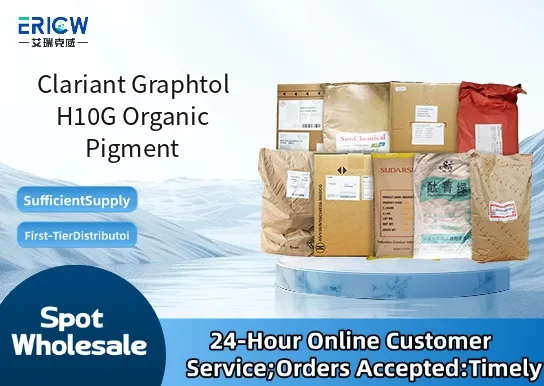
High chroma and excellent color strength for vibrant, consistent shades.
Outstanding thermal stability suitable for high-temperature processing up to 220 °C.
Good lightfastness and weather resistance in demanding outdoor applications.
Low migration behavior, ensuring color integrity in polymer matrices and food-contact-compliant systems.
Excellent dispersibility in common organic solvents and polymer carriers, enabling efficient incorporation.
Automotive interior and exterior plastics (PP, ABS, PC/ABS blends).
Household appliances with heat-resistant housing components.
Packaging films requiring FDA-compliant colorants for non-direct food contact.
Engineering plastics used in electronics housings and connectors.
Masterbatch formulations for injection molding and extrusion processes.
| Chemical Type | Quinacridone derivative |
| Product Form | Free-flowing powder |
| Appearance | Reddish-violet fine powder |
| Primary Applications | Plastics, masterbatches, coatings |
| Key Features | Thermally stable, low migration, high tinctorial strength |
| Benefits | Consistent color reproducibility, minimal filter clogging, broad processability |
| Regulatory Status | Complies with EU REACH; suitable for non-food-contact plastic applications |
| Recommended Carrier | PE, PP, or EVA-based masterbatches |
Q1: What is the primary chemical class and typical application focus of Graphtol H10G?
A: Graphtol H10G is a high-performance quinacridone-based organic pigment, engineered for demanding decorative and functional applications in thermoplastic polymers—particularly where excellent heat stability, lightfastness, and color strength are required, such as in automotive interior parts and premium consumer goods.
Q2: Is Graphtol H10G suitable for use in polyolefins like PP or PE?
A: Yes—Graphtol H10G demonstrates good compatibility and dispersion stability in polyolefins, including both homopolymer and copolymer grades. It maintains strong chroma and minimal thermal degradation during standard extrusion and injection molding processes.
Q3: How does Graphtol H10G perform under UV exposure compared to conventional red pigments?
A: As a quinacridone derivative, Graphtol H10G offers significantly enhanced UV resistance and weathering stability relative to many azo-based reds. It retains hue integrity and gloss over extended outdoor exposure, making it well-suited for applications requiring long-term color consistency.
Q4: What are the recommended dispersion methods for optimal performance in masterbatch production?
A: For best results, Graphtol H10G should be dispersed using high-shear compounding equipment—such as twin-screw extruders—with appropriate screw configuration and temperature profiling. Pre-wetting with carrier resin and controlled residence time help achieve uniform distribution and maximize color development.
Q5: Can Graphtol H10G be used in food-contact compliant compounds?
A: Graphtol H10G is not pre-approved for direct food-contact applications. Its suitability depends on final formulation, processing conditions, and regulatory evaluation by the compounder or end-user. Always consult Clariant’s regulatory documentation and conduct migration testing per applicable regional requirements before use in food-contact systems.
Contact With Us:
E-mail: wangxingqiang@ericwchem.com
Have a Questions? Call Us:
Add:
Building A1, Jiete Industrial Park, Huangpu District, Guangzhou City, Guangdong Province, China