English
 Español
 tiếng việt
 русский
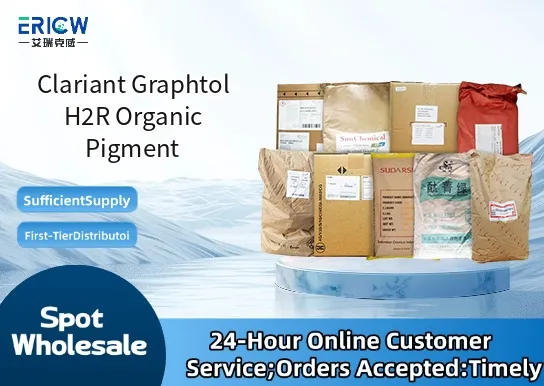
High thermal stability suitable for demanding processing conditions up to 280 °C.
Excellent lightfastness and weather resistance, meeting ISO 105-B02 (Grade 7–8) requirements.
Outstanding dispersion performance in both solvent-based and water-based systems.
Low volatile organic compound (VOC) content, supporting sustainable formulation goals.
Consistent batch-to-batch color strength and hue reproducibility.
Automotive coatings requiring high durability and chromatic purity.
Industrial maintenance paints for corrosion-resistant finishes.
Plastic coloration for engineering thermoplastics including polyolefins and ABS.
Printing inks for flexible packaging with stringent migration compliance.
High-performance architectural coatings exposed to UV and moisture.
| Chemical Type | Polycyclic quinacridone derivative |
| Product Form | Fine free-flowing powder |
| Appearance | Reddish violet crystalline solid |
| Primary Applications | Coatings, plastics, inks |
| Key Features | Thermally stable, lightfast, low migration |
| Benefits | Color consistency, easy dispersion, regulatory compliant |
| Regulatory Status | REACH registered; compliant with EU Directive 2002/72/EC for food-contact plastics (subject to specific migration limits) |
| Storage Conditions | Store in cool, dry place below 30 °C; protect from moisture and direct sunlight |
Q1: What is the primary application field for Graphtol H2R?
A: Graphtol H2R is specifically developed for high-performance industrial coatings and inks where excellent heat stability, lightfastness, and dispersibility are required—particularly in automotive refinish, coil coating, and premium packaging inks.
Q2: Is Graphtol H2R suitable for food-contact applications?
A: Graphtol H2R is not intended or certified for direct food-contact applications. It is designed for non-food-related industrial uses; customers requiring food-safe pigments should consult Clariant’s dedicated food-contact compliant product portfolio.
Q3: How does Graphtol H2R perform under elevated temperature conditions?
A: Graphtol H2R exhibits good thermal stability, enabling reliable performance during high-temperature curing processes typical of industrial baking enamels and powder coatings—without significant hue shift or decomposition.
Q4: What types of resin systems is Graphtol H2R compatible with?
A: Graphtol H2R demonstrates broad compatibility with common industrial binder systems including acrylics, polyesters, alkyds, epoxy esters, and urethane-modified resins—though optimal dispersion and stability require formulation-specific optimization.
Q5: What is the typical dosage range for Graphtol H2R in coatings formulations?
A: Dosage depends on the desired shade intensity and application requirements, but Graphtol H2R is typically used at low concentrations—generally ranging from 0.1% to 2% by weight relative to total formulation solids.
Contact With Us:
E-mail: wangxingqiang@ericwchem.com
Have a Questions? Call Us:
Add:
Building A1, Jiete Industrial Park, Huangpu District, Guangzhou City, Guangdong Province, China