English
 Español
 tiếng việt
 русский
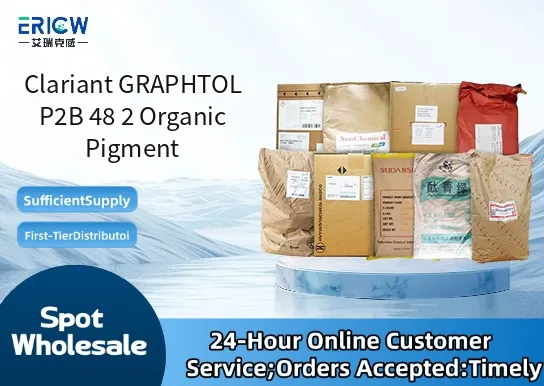
High chroma and excellent color strength for vivid, consistent red-shade hues.
Outstanding thermal stability suitable for high-temperature processing up to 280 °C.
Good lightfastness and weather resistance in outdoor applications.
Excellent dispersibility in both polar and non-polar polymer systems.
Low volatility and minimal migration in PVC, polyolefins, and engineering plastics.
Coloration of rigid and flexible PVC for building profiles, flooring, and cables.
Pigmentation of polypropylene (PP) and polyethylene (PE) for automotive interior parts.
Masterbatch formulation for injection-molded consumer goods and packaging films.
Specialty applications in polycarbonate (PC) and ABS for electronics housings and appliances.
| Chemical Type | Quinacridone derivative (Pigment Red 122) |
| Product Form | Fine free-flowing powder |
| Appearance | Violet-red powder with uniform particle size distribution |
| Primary Applications | PVC, polyolefins, engineering thermoplastics |
| Key Features | High tinctorial strength, low dusting, excellent heat stability |
| Benefits | Consistent batch-to-batch color, reduced dosage requirements, improved processing safety |
| Regulatory Compliance | REACH registered; compliant with EU Directive 2002/61/EC for pigments |
Q1: What is the primary application field for GRAPHTOL P2B 48 2?
A: GRAPHTOL P2B 48 2 is specifically developed for high-performance gravure and flexographic inks used in packaging applications, particularly where excellent rub resistance, gloss retention, and consistent print definition are required.
Q2: Is this pigment suitable for food-contact packaging inks?
A: GRAPHTOL P2B 48 2 is designed to meet stringent regulatory expectations for packaging inks, including compliance with general food-contact guidelines. Final suitability depends on full formulation assessment, processing conditions, and applicable regional regulations—users must conduct appropriate migration testing and regulatory review for their specific application.
Q3: How does GRAPHTOL P2B 48 2 perform in solvent-based versus water-based ink systems?
A: This pigment exhibits strong compatibility and dispersion stability in conventional solvent-based gravure inks. In water-based systems, performance depends heavily on resin selection and dispersant optimization—formulators typically achieve good results with appropriate polymeric dispersants and pH control.
Q4: What is the typical dosage range when using GRAPHTOL P2B 48 2 in printing inks?
A: Dosage is formulation-dependent but generally ranges from 0.1% to 2% by weight relative to total ink solids, depending on desired color strength, substrate, and print process requirements. It is typically used at low concentrations due to its high tinting strength and efficient dispersion behavior.
Q5: Does GRAPHTOL P2B 48 2 require special handling or stabilization during ink manufacturing?
A: Standard industrial pigment handling procedures apply. For optimal dispersion, pre-wetting with compatible solvents and controlled bead-milling under moderate temperature conditions are recommended. Avoid prolonged exposure to strongly acidic or alkaline environments during processing to maintain pigment integrity.
Contact With Us:
E-mail: wangxingqiang@ericwchem.com
Have a Questions? Call Us:
Add:
Building A1, Jiete Industrial Park, Huangpu District, Guangzhou City, Guangdong Province, China